
large fabrication · hillsborough, new jersey
Home / Large Fabrication
Our large metal fabrication is built around one sequence: we weld it, then we machine it. Structural frames, cages, oversized weldments and heavy assemblies are welded up here in Hillsborough, New Jersey, and then finish-machined on the same floor. Bores, faces and mounting holes end up where the print says, rather than where the weld pulled them.
The value is the sequence, not the welding on its own. A fabricator who has to send the machining out is quoting you two shops and two schedules, and the second shop inherits whatever the first one left. Here the reference set on the mill is the reference the weldment was built to.
Many weldments need machining before the first weld goes on: weld preps and bevels cut, plates squared, bores and fits machined so the parts go together right. We do that preparatory machining here as well. At most shops the parts go from a machine shop to a welding shop and back to the machine shop for final machining. Here they stay on one floor from the first cut to the last, with one schedule and one shop answerable for the result.
We lift to 10 tons. Weldments are milled to 157″ × 40″ × 70″ on the Zayer, and large housings are bored on our DeVlieg horizontal boring mill. Rings and flanges for an assembly are turned to 60″ diameter on the vertical lathes.
A shaft gets its flange welded on, then goes back in the lathe so the journals and faces run true to the finished part. Drive and thrust shafts are made this way, turned between centres to 170″. See shaft machining.
Worn areas on industrial components are built back up with weld and cut back to size. Housing bores are restored the same way on a gearbox rebuild. The machining that makes the part fit again happens in the same building. That covers shafts, housings, flanges and frames alike.
Weldments are heavy and awkward to ship, so most of this work is regional: plants across New Jersey — Bridgewater, Somerville, Flemington, Edison, Piscataway and Trenton, and the industrial corridor through Newark, Elizabeth, Jersey City and Paterson — and into eastern Pennsylvania, New York and New England. Customers in Somerset, Hunterdon, Middlesex and Mercer counties often collect on their own truck. Further afield, assemblies go crated across the United States, Canada and Mexico. Send the drawing and the weight and we will tell you how we would build and hold it.
Fabrication and machining on the shop floor. Click to play.
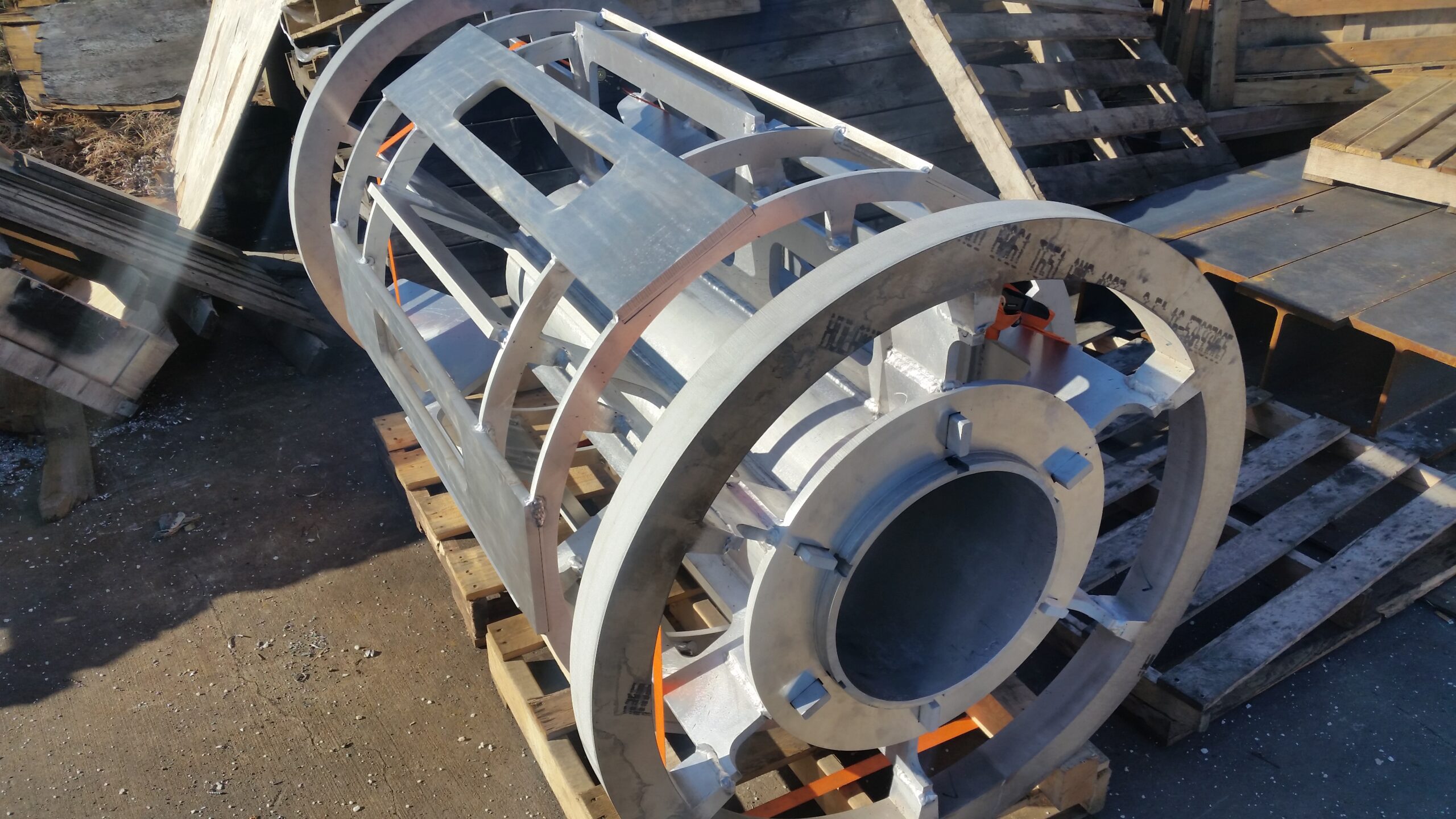
Fabricated steel cage assembly with machined rings.
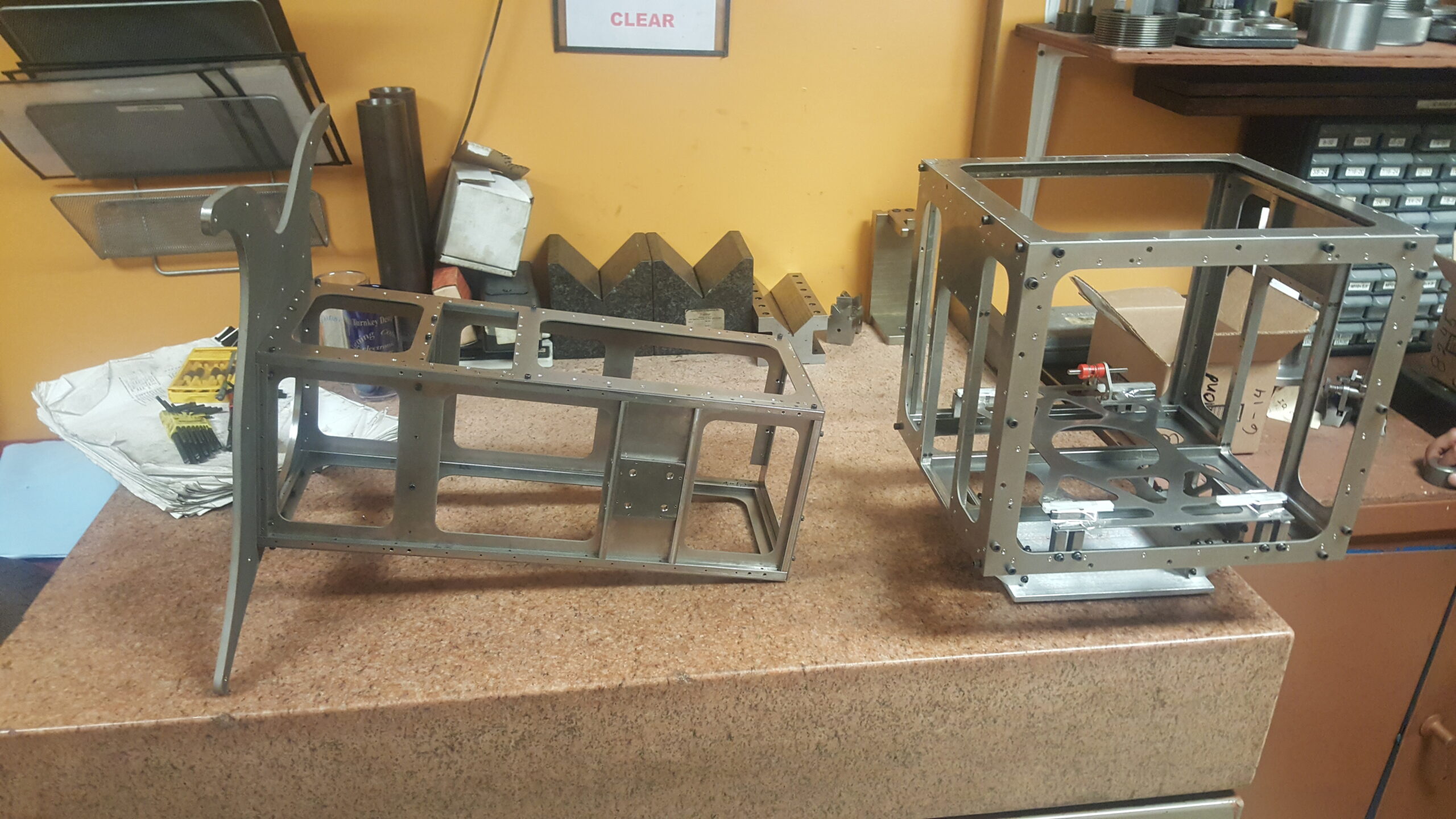
Fabricated steel frames and machined cones in the shop.
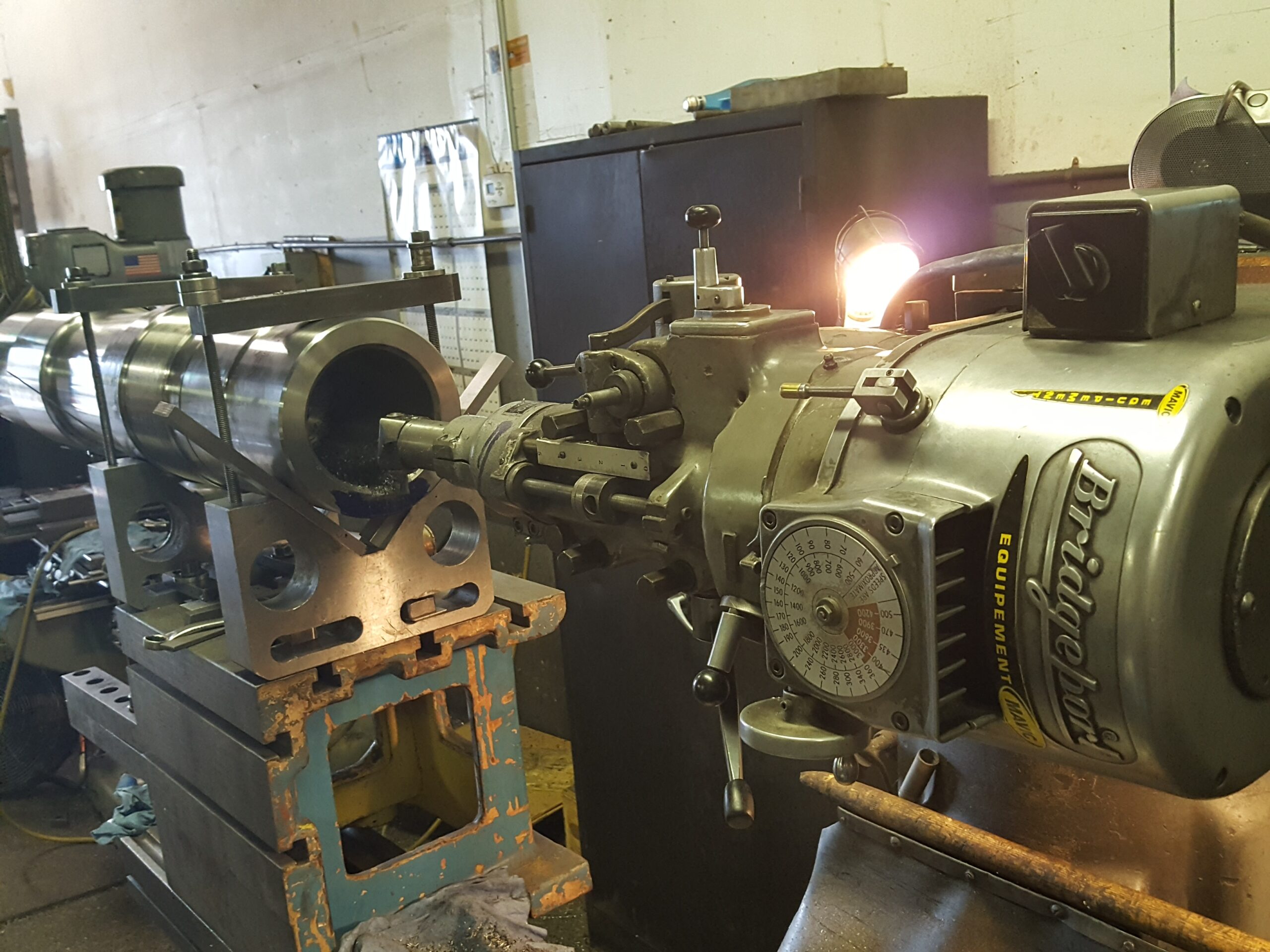
Weld repair on an industrial component, before it is machined back to size.
Weld repair, heavy components and machined assemblies from our shop in Hillsborough, New Jersey. More photos and videos are in our gallery.
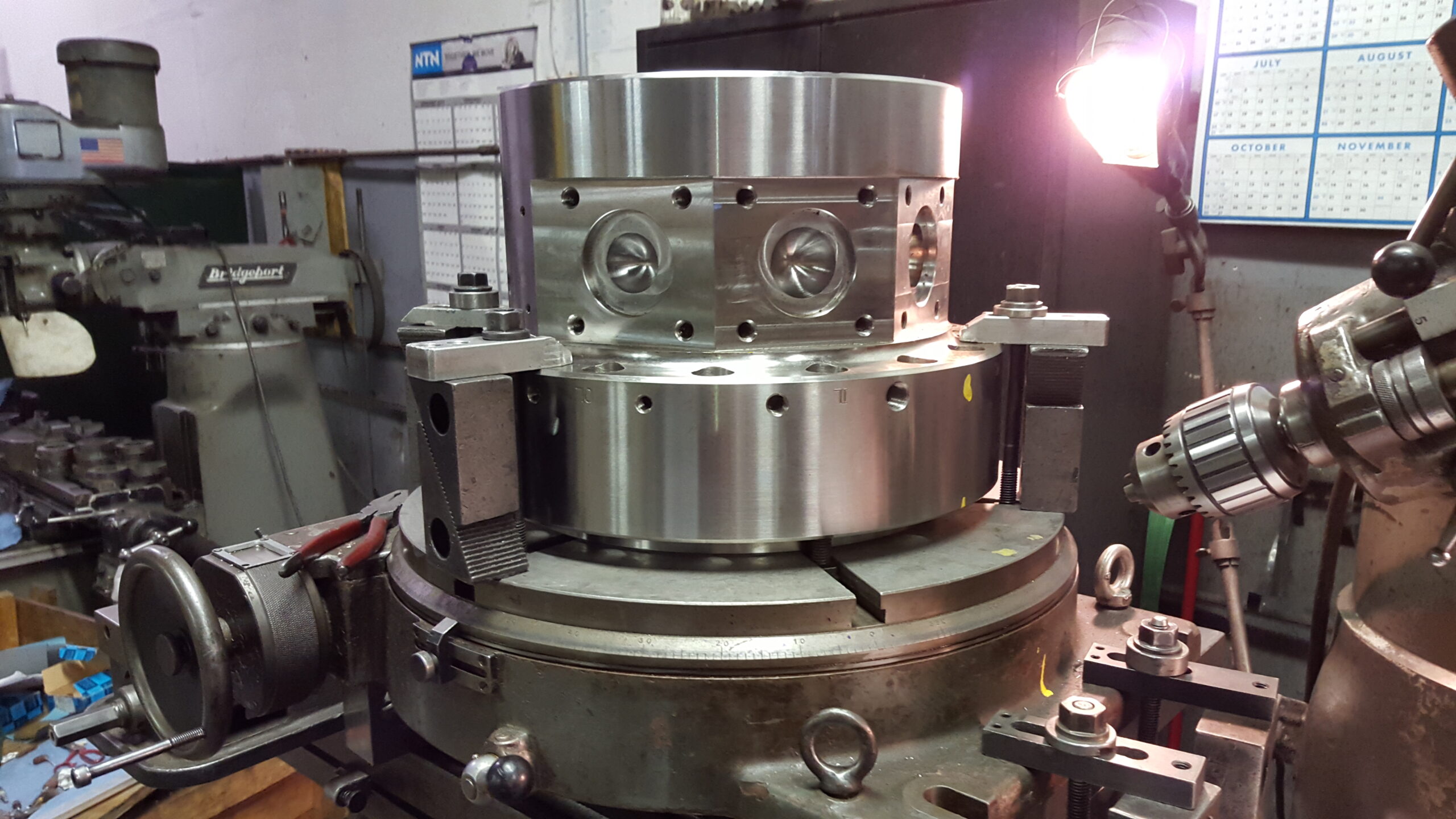
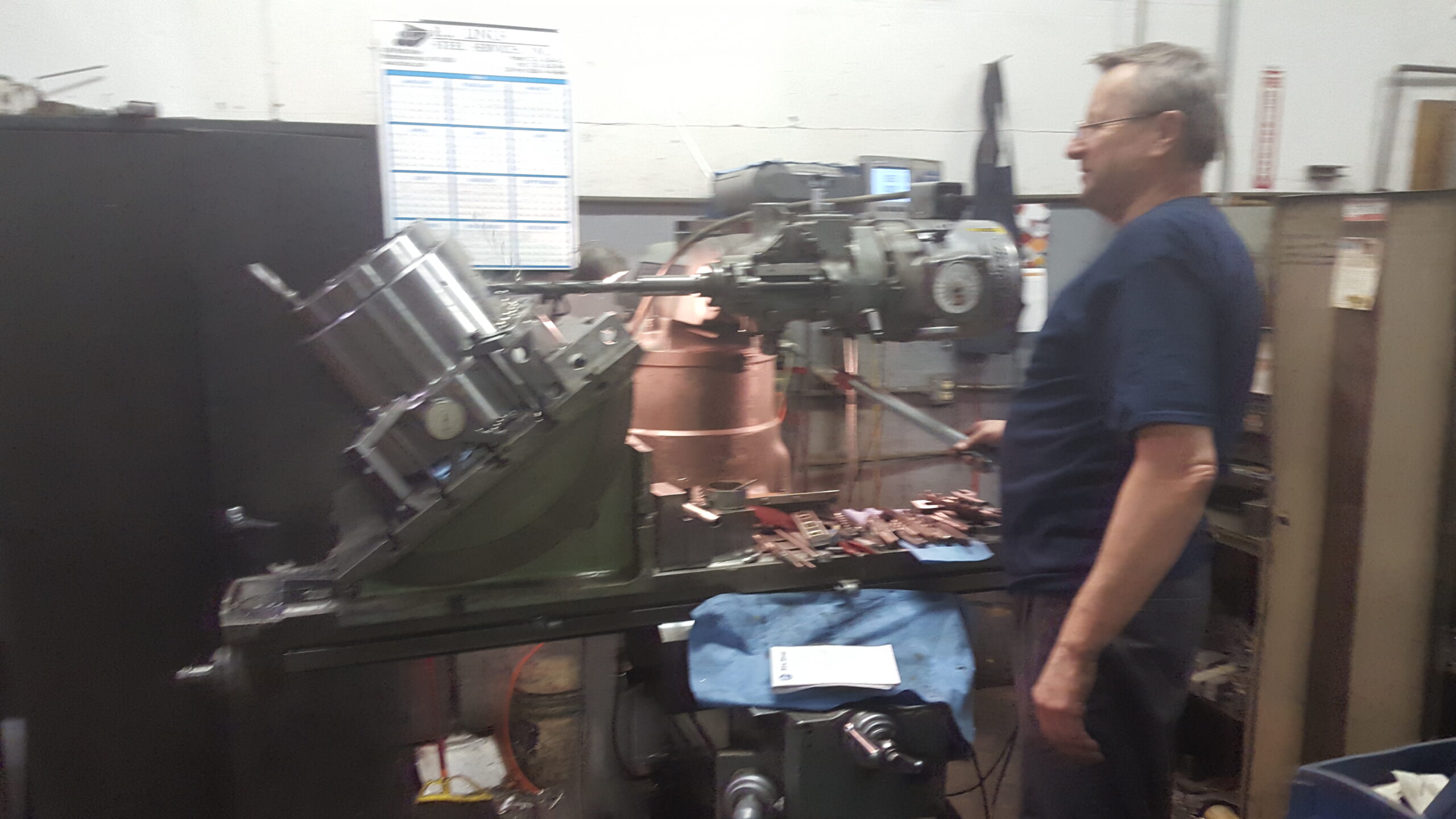
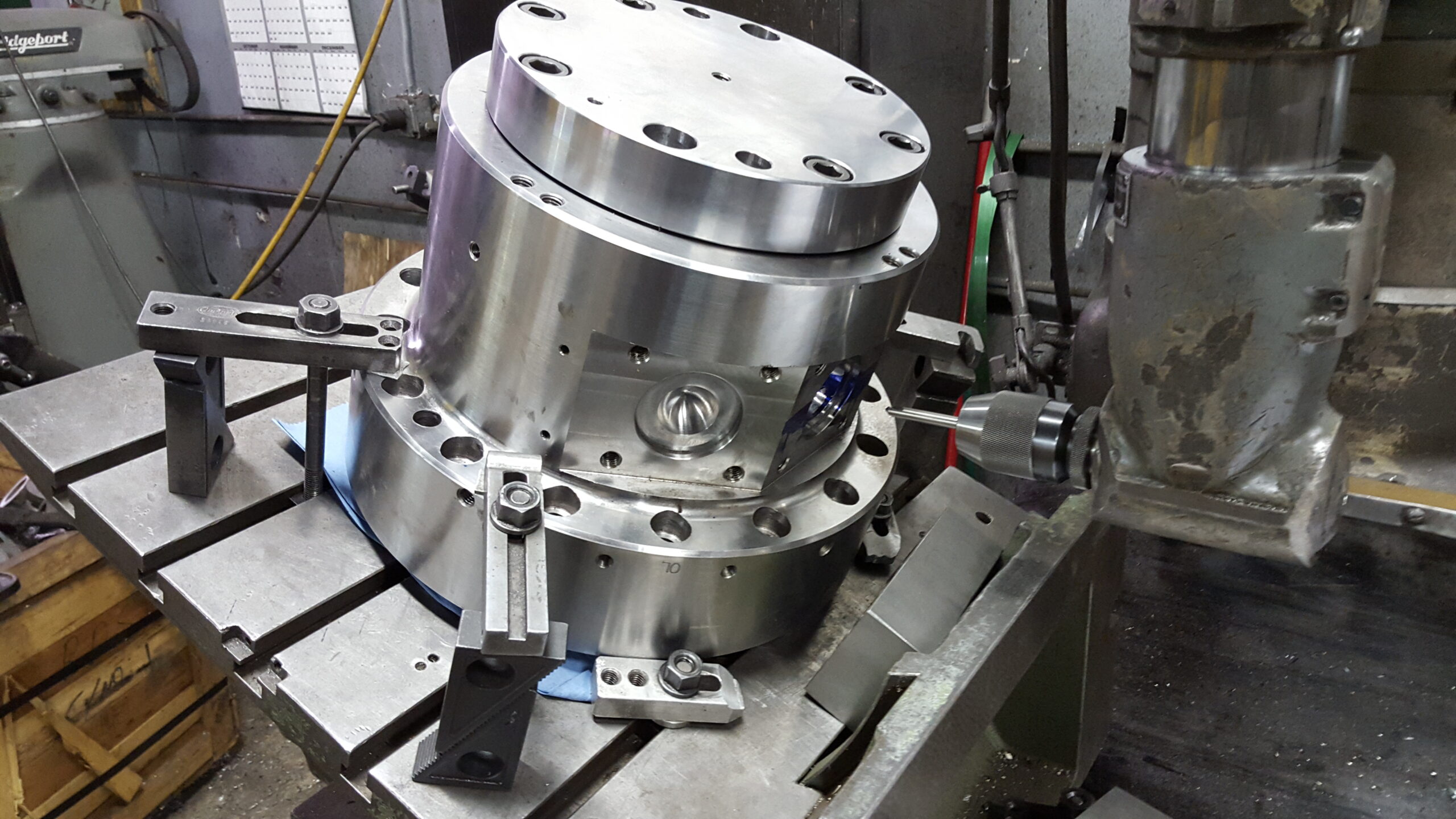
Most of what we weld is machined afterwards. Built to your print, or from the old assembly when there is no drawing.
Structural steel, plate, tube and heavy sections, welded and then machined complete.
Welded up, then milled for flats, bores and hole patterns so the faces run true.
Fabricated assemblies with machined rings, flanges and mounting faces.
Drive and thrust shafts, welded and then turned so the journals run true.
Carbon steel and stainless tubes, welded and machined to print.
Worn areas built back up with weld and cut back to size.
The work runs in three steps: preparatory machining, welding, then final machining. Weld preps, bevels and fits are cut before welding, so the parts go together right the first time. After welding, a frame goes on the mill for its flats and hole patterns. A shaft gets its flange welded on, then goes back in the lathe so the journals and faces run true. A housing with a worn bore is built up with weld, then line bored back to size.
In every case the machining comes after the welding, so the finished part follows the print rather than the heat of the weld. That is the reason a fabrication job comes here rather than to a welding shop.
The frame, the shafts, the bored housings and the flanged parts are all made here, so the assembly fits together the first time. Every part is checked against the print before it ships.
Most fabrication is built to a customer’s print, in PDF, DWG, DXF or a STEP model. When there is no drawing, we work from the old assembly or a dimensioned sketch, and we reverse engineer the parts that need it.
What a weldment can meet on its way through the shop.
| Lifting | to 10 tons |
| Milling after welding | 157″ × 40″ × 70″ on the Zayer |
| Horizontal boring mill | DeVlieg, travels 96″ × 40″ × 70″, 5″ spindle |
| Line boring | to 20″ diameter over roughly 50″ |
| Vertical turning | to 60″ diameter for rings and flanges |
| Horizontal turning | 32″ × 170″ between centres |
| Materials | carbon steel, 4140 and stainless |
| Drawings | PDF, DWG, DXF, STEP, or the old assembly |
Large weldments, machine frames and bases, cages, structural steel, plate, tube and heavy sections, round shafts with welded flanges, drive and thrust shafts, and welded tubes including stainless. Most of it is then machined here.
Yes — that is the point of doing it here. A frame is welded up, then goes on the mill for its flats, bores and hole patterns. A shaft gets its flange welded on, then goes back in the lathe so the journals and faces run true to the finished part rather than to where the weld pulled it.
We lift to 10 tons, mill to 157″ × 40″ × 70″ on the Zayer, and turn to 60″ diameter on the vertical lathes for any rings or flanges the assembly needs. Send the drawing and the weight and we will confirm.
Yes. Worn areas on industrial components are built back up with weld and cut back to size, and the machining that makes the part fit again happens in the same building.
Yes. Welded stainless tubes and stainless weldments are regular work here, alongside carbon steel and 4140.
Yes. Most fabrication is built to a customer’s print — PDF, DWG, DXF or a STEP model. When there is no drawing we work from the old assembly, or from a dimensioned sketch.
Yes, and that is usually the reason a fabrication job comes here rather than to a welding shop. The frame, the shafts, the bored housings and the flanged parts are all made on this floor, so the assembly fits together the first time.
Hillsborough, New Jersey, in Somerset County. Most fabrication work comes from New Jersey, eastern Pennsylvania, New York and New England, and customers often collect on their own truck. Further afield, assemblies go crated across the United States, Canada and Mexico.
A weldment is only finished once it has been machined. These are the services it meets on the way.
Send the drawing and the weight and we will tell you how we would build and hold it. Call the shop or email sales@zalamachine.com, or use the quote form below.