
careers · hillsborough, new jersey
Home / Work at Zala
Looking for machinist jobs in New Jersey where you will actually learn the trade? Zala Machine Co. is a family machine shop in Hillsborough, in Somerset County. Stanley Zala trained in Poland, spent years at Davis-Standard, and opened this shop in 2002 with a Bridgeport and a manual lathe. His son runs it today, and the third generation works on the floor.
We make large parts, extruder components, shafts and gearbox repairs, and a lot of one-off work that production shops will not touch.
No two weeks are the same. One day it is a 170-inch shaft between centres, the next a breaker plate with 1,600 holes, the next a worn part with no drawing that has to be measured and remade. You see the whole job: the print, the setup, the cut and the inspection.
Some of the best people on our floor came in with little or no experience. The ones who made it had one thing in common. They were serious about learning the trade and showed up ready to work. If that is you, we will teach you.
The shop is an easy drive from Somerville, Bridgewater, Manville, Raritan, Flemington, New Brunswick, Piscataway and Edison. There is one first shift, Monday to Friday, 7:00 am to 5:30 pm.
Life on our shop floor. Click to play.

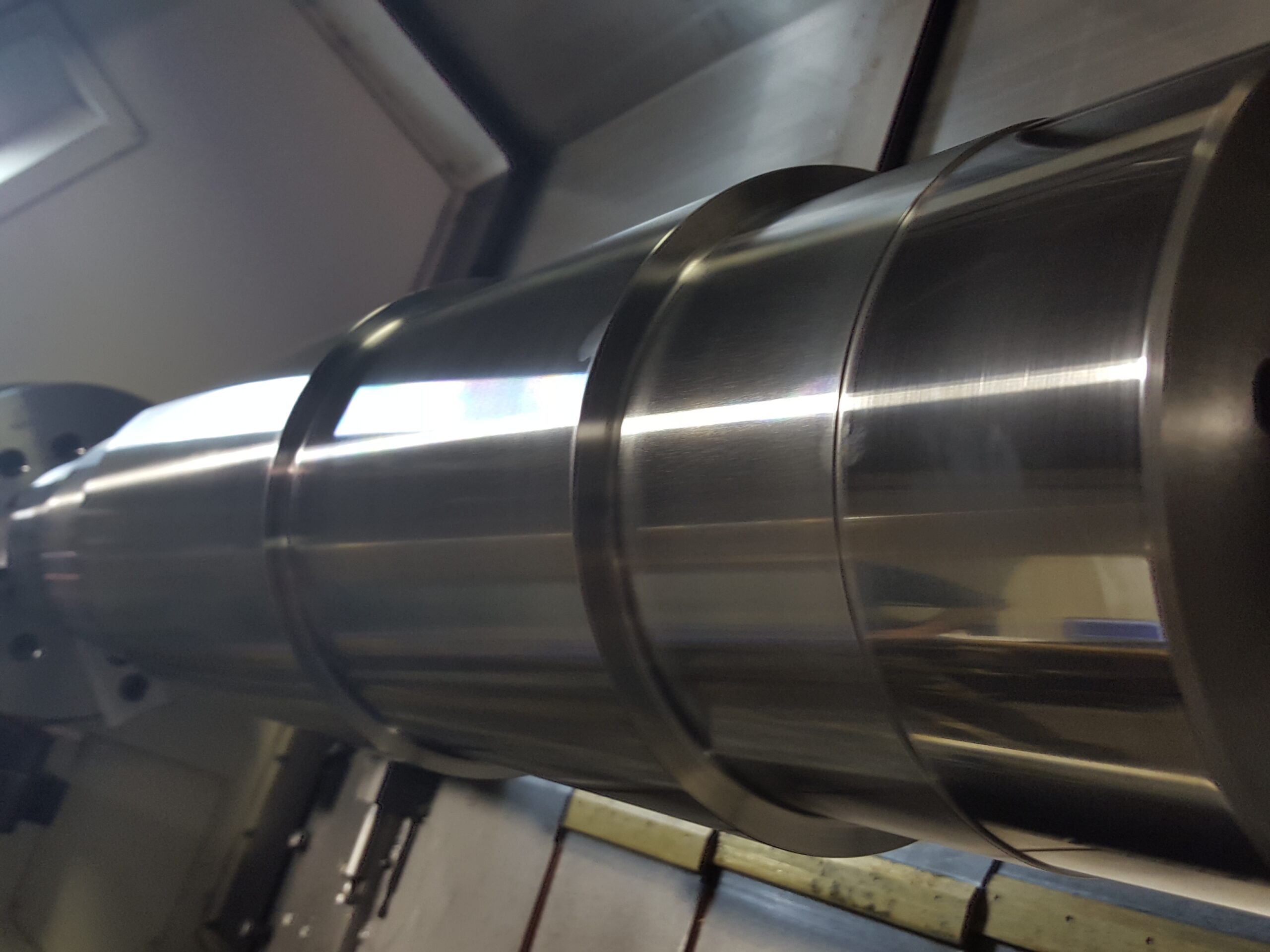
A long shaft carried in the steady rest, the kind of work you learn here.
Real parts from our floor. More photos and videos are in our gallery.
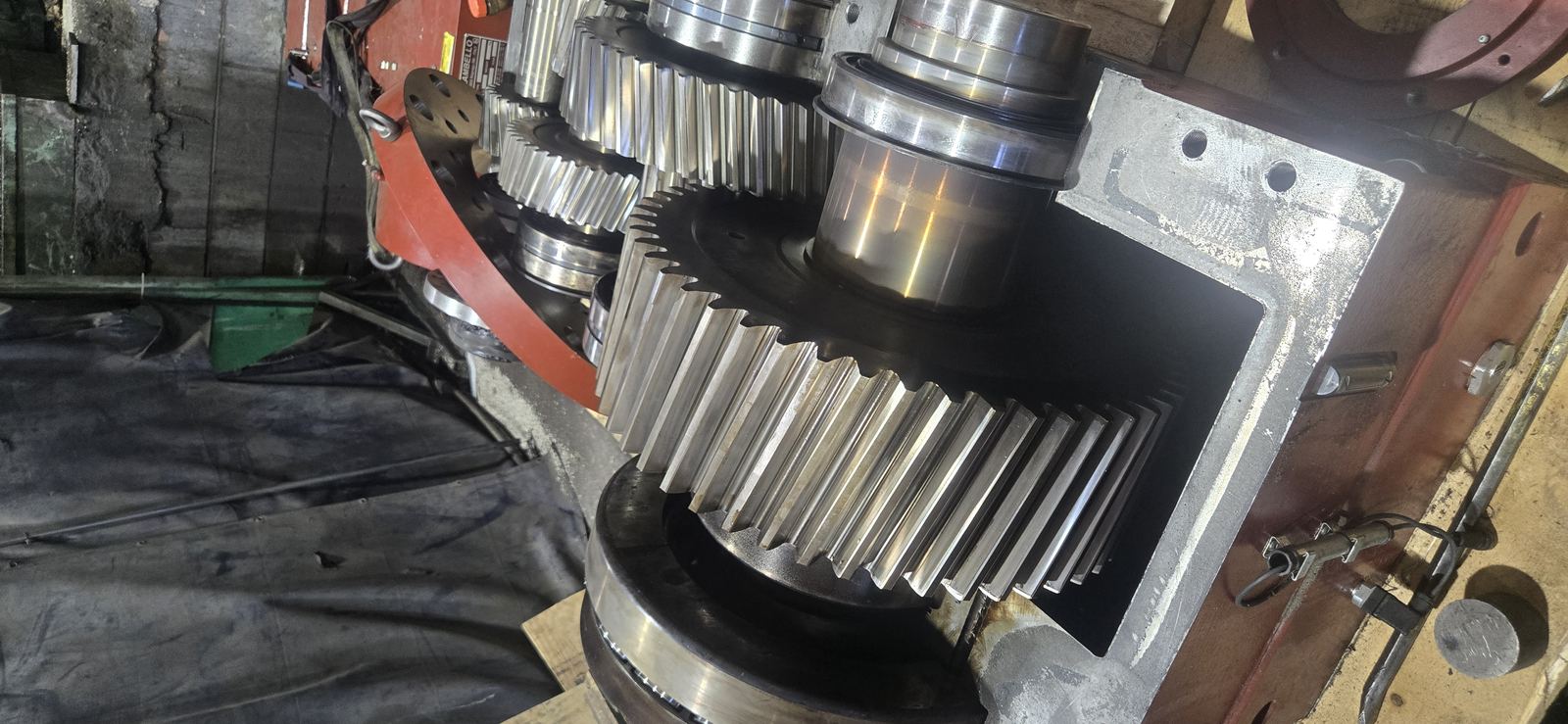
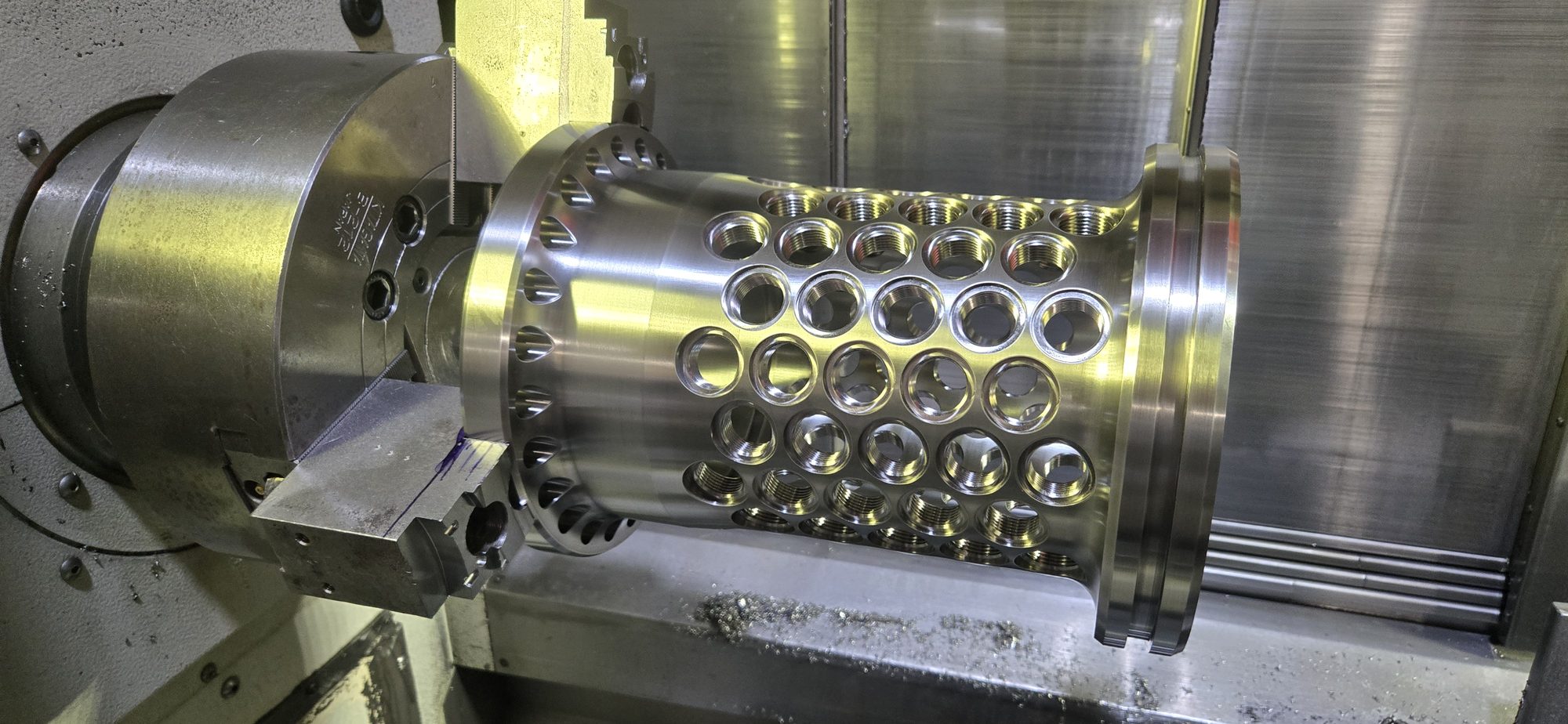
Two full-time positions in Hillsborough, New Jersey. Click a job for the full description.
Start on our CNC lathes, setting tools and checking your own parts, then learn to program them. Some shop experience, print reading and measuring tools required. $20–$26 an hour, up to 10 hours of overtime a week.
Own inspection on the floor, from first article to final check, on our Keyence XM-5000 portable CMM and hand tools. Shop inspection experience and strong GD&T required. $26–$34 an hour.
There is no one way to become a machinist. Some people start in trade school, some come up through a shop, and some switch over from another trade. Every way has one thing in common: time on the shop floor, making parts. The more experience and skill you build, the more of the part you are trusted to make.
This is the path we recommend, from what we have seen work over three generations.
Begin on manual lathes and mills. A manual machine teaches you what cutting feels and sounds like, how a tool wears, how material moves, and why a part holds size or does not. You learn to read a print, choose a tool, measure your own work and fix your own mistakes. Everything you do later builds on this.
From here the path splits. Some machinists stay on manual machines and master them. A skilled manual machinist who can make a one-off part, a repair or a difficult large part is rare and valuable. Others move on to CNC.
An operator runs proven programs: loading parts, starting the cycle, changing inserts and checking parts. Some call it button pushing. It is the start, not the goal. A good operator watches, measures and asks why.
Setup means setting tools and offsets, choosing workholding, proving out a program and running the first part to size. This is where you learn why a setup holds a tolerance, and why it sometimes does not.
A programmer plans the order of operations, chooses tools, speeds and feeds, and writes a program that makes the part right the first time. The best programmers have run and set up the machines themselves.
Instead of CNC, some machinists specialize in a process such as grinding, honing, gundrilling or gear cutting. Each one takes years to learn well, and a specialist who truly knows a process is always in demand.
You can stick to one machine or one process, master it, and be a great machinist. To be a true master of machining, you need to master all the machines and processes that go into making a part: manual and CNC, turning and milling, grinding and finishing, measuring and inspection. That takes many years, and it is the goal worth working toward.
The work is physical, precise and never the same twice. Early on you will deburr, clean up and run simple parts. How fast you move up depends on how serious you are, how carefully you work, and how many good questions you ask.
Most small machine shops do not hire from a résumé alone. They hire people they believe will show up, work hard and learn. This is what works.
Say plainly that you want to learn the trade and make parts. A shop will train someone willing over someone who thinks they already know it all.
Shop class, trade school, hobby machining, welding, and car or mechanical work all count. So does a photo of a part you made. List the machines you have run, even for a short time.
Show up ready to work, too. Bring your own safety glasses and steel-toe shoes, and if you can, a digital caliper. It tells a shop you take the job seriously before you say a word.
Be able to read a tape measure and a ruler, read a micrometer and a caliper, work with fractions and decimals, and read a simple print. Most of this can be learned for free, online or at a trade school. Showing up with it tells a shop you are serious.
If you are not getting calls, go to local machine shops. Ask for the owner or the foreman, tell them you want to learn how to make parts, and leave your name and number. Many machinists got their first job exactly this way. Go early in the day, dress for work, and be ready to start at the bottom.
Be on time, every day. Ask questions and write down the answers. Check your own work before you hand it over. Keep your machine and your area clean. Those habits move you up faster than anything else.
If you are in New Jersey and this sounds like you, apply to Zala.
Straight answers before you apply.
| CNC Lathe Trainee | |
| Inspector / Quality Manager | |
| Benefits | paid vacation, sick and personal days; health insurance with Zala covering half the premium |
| Overtime | regular overtime, paid at time and a half |
| Schedule | full time, one first shift, Monday to Friday, 7:00 am to 5:30 pm |
| Location | Hillsborough, New Jersey (Somerset County) |
| Training | on real jobs, next to experienced machinists |
For the trainee job, no. Some shop time helps, but commitment matters more. We have trained people who came in with very little experience.
Yes, once you can run the machine and check your own parts. You learn setup first, then programming, on real jobs.
It depends on the person. Most people who work at it can write simple lathe programs within their first year, and it takes several years to become a well-rounded machinist.
Yes. You need to read a print, understand tolerances and know what a datum is. We teach the rest on the job.
The CNC lathe trainee job pays $20 to $26 an hour and the inspector job pays $26 to $34 an hour, based on experience and skill.
One first shift, Monday to Friday, 7:00 am to 5:30 pm, with regular overtime.
Hillsborough, New Jersey, in Somerset County. It is an easy drive from Somerville, Bridgewater, Flemington, New Brunswick and Edison.
Fill in the form below. We read every application, and we will call you if there is a fit. A résumé helps but is not required.
Questions first? Call the shop or email sales@zalamachine.com.