
for service shops and machine builders
Home / Overflow Machining
Our subcontract machining is for shops that already run their own floor. This page is about the parts that don’t fit in yours: too long for your lathe, a bore past your hone, a hole deeper than anything you own. We take those parts, finish them to your print and send them back to you. We don’t quote your customers.
A service shop is built around the work it sees every week. The shaft that’s twice as long, the cylinder bore past the hone’s reach, the 90-inch gundrilled hole: those turn up a few times a year, and buying a machine for them doesn’t make sense. That’s the work our floor is set up for. We handle the oversize part, and you keep the job.
If you run a university or research lab machine shop, the same applies. See our research and prototype machining page.
Most shops never ask this out loud, so we’ll answer it up front. We work as your subcontractor. Your customer is your customer. We don’t contact them and we don’t quote them. The part comes to us from you and goes back to you. If you want it shipped straight to your customer, it goes with the paperwork you specify.
Send us one operation or the whole part. We can hone a tube you have already turned, gundrill a shaft you will finish yourself, or make the part complete from bar. If there is no drawing, we measure the worn part and work from that.
We run Saturdays when a job needs it. If your customer is waiting on a broken part, tell us that when you call and we’ll set the schedule with you.
Oversize work on our shop floor. Click to play.
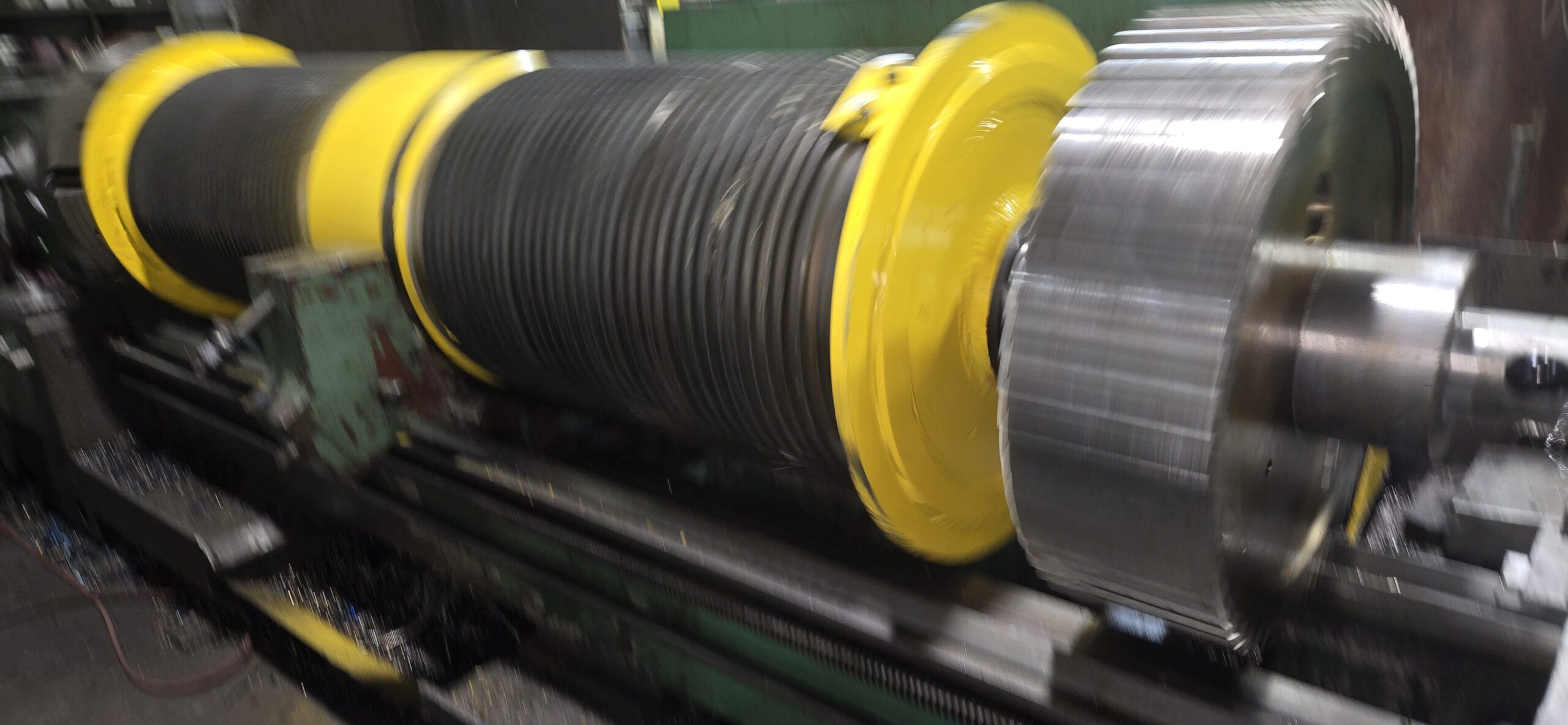
Grooved cable drum for a shipyard crane, machined on the large lathe.
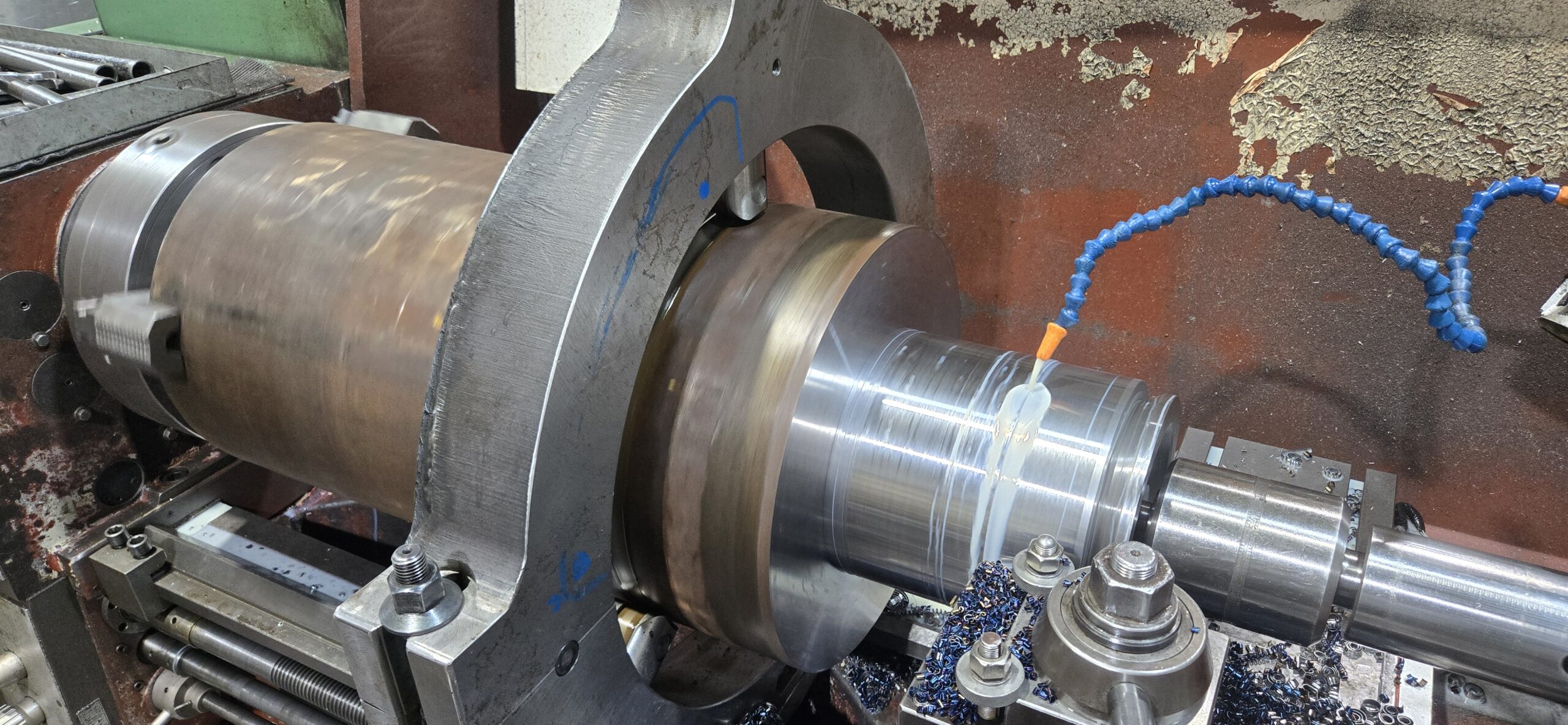
Large diameter bore machined with coolant on a horizontal lathe.
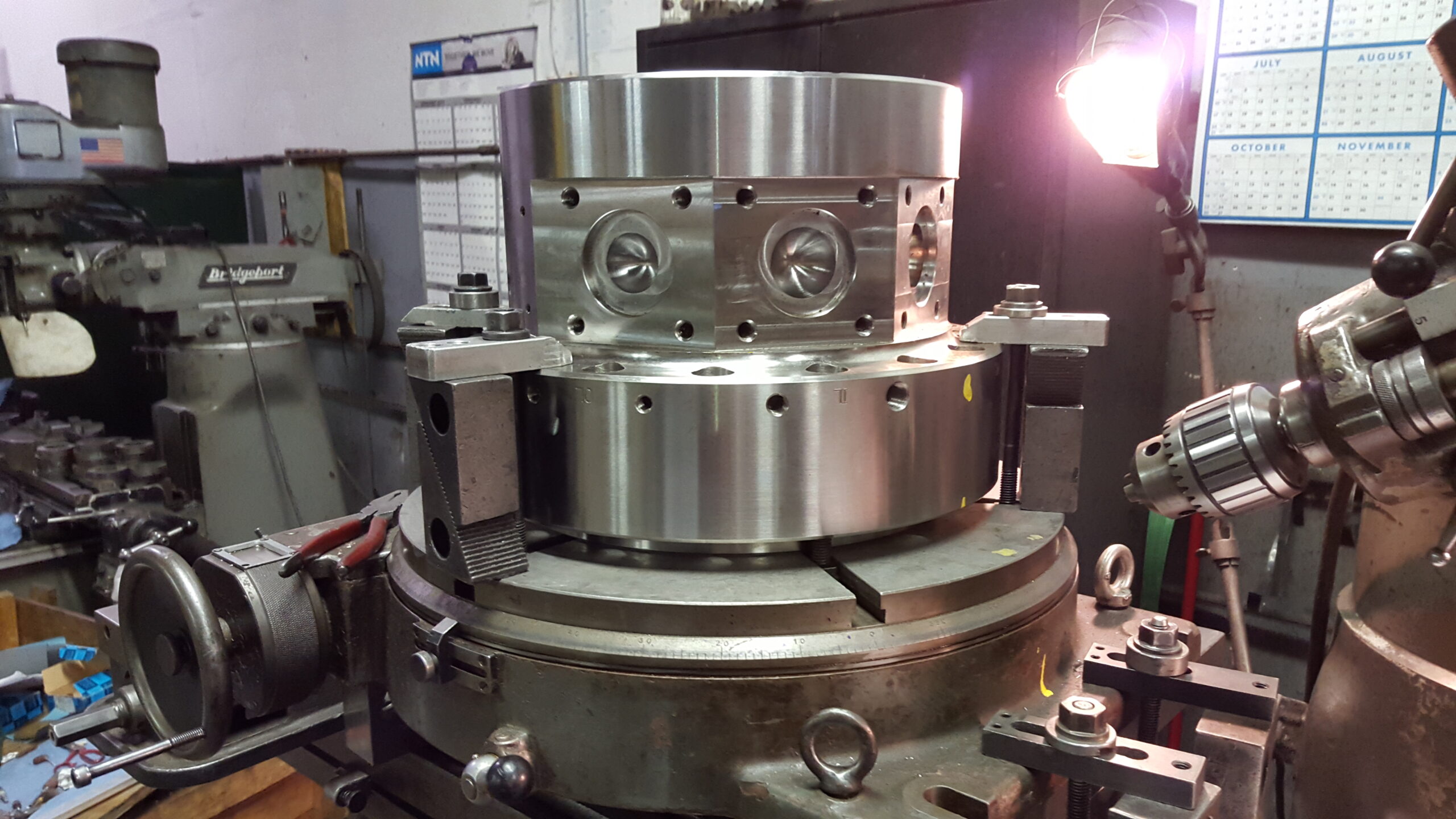
The kind of work service shops send us: long rolls, large housings and heavy assemblies. More photos and videos are in our gallery.
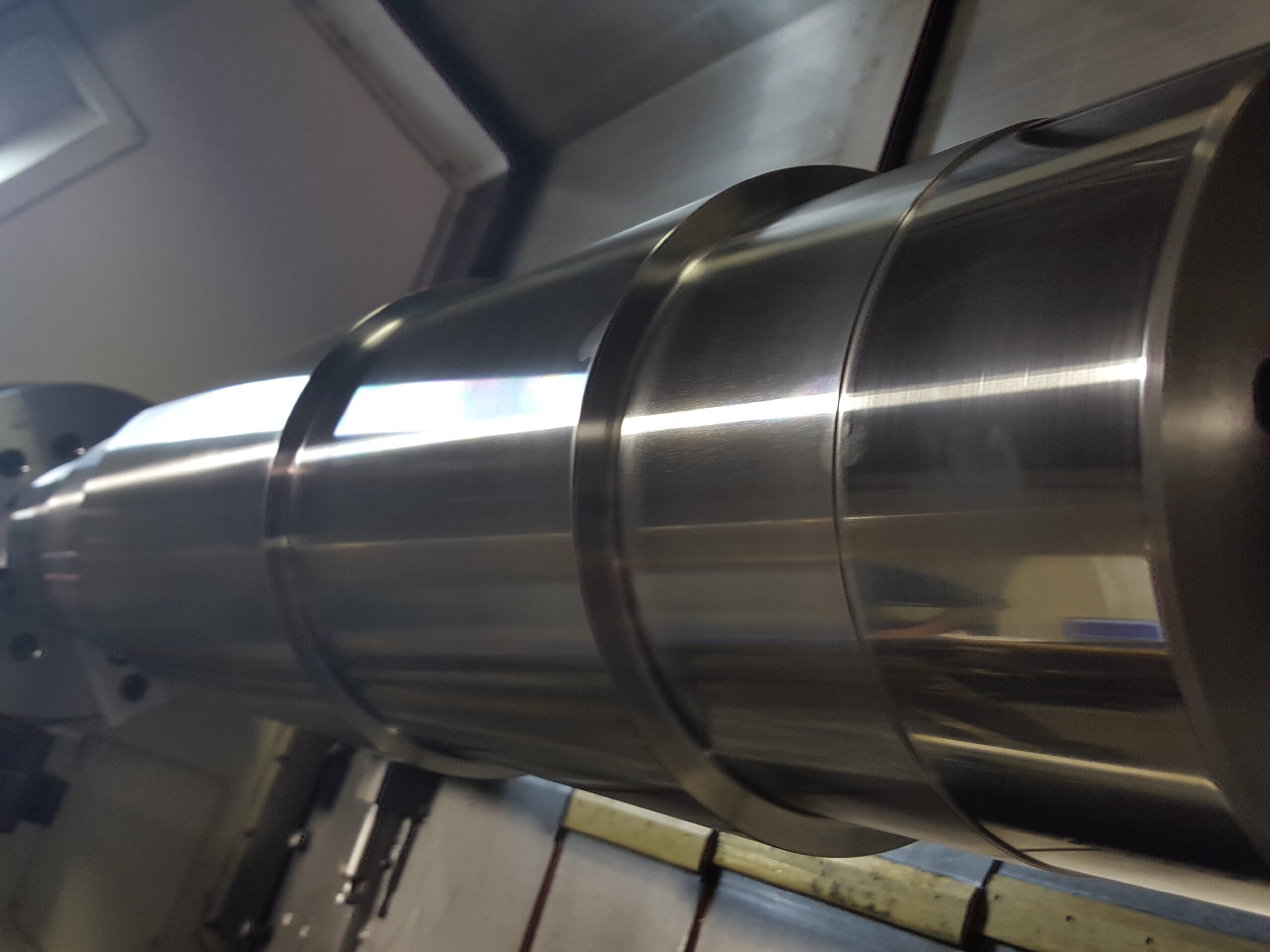
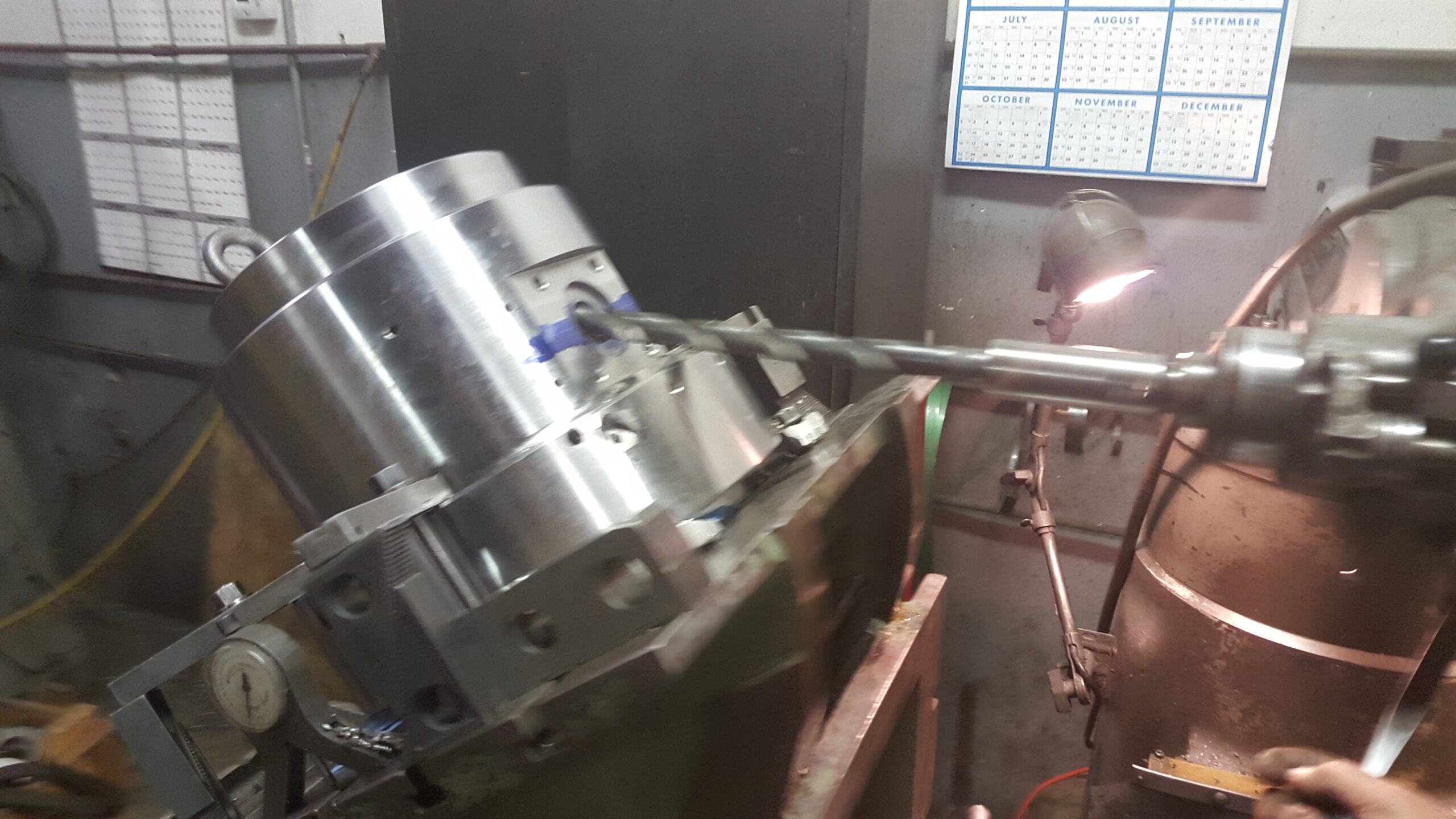
Four steps, and the same person is on your part the whole way through.
A drawing, a sketch with the critical dimensions, or the worn part itself. If there’s no drawing, we measure the old part and work from that.
We review every RFQ within one to two business days. Simple parts are quoted in one to two days, and larger jobs within a week.
One person owns your part from setup to final check, and you can call them directly.
Material certs, first article inspection and inspection reports on request, on our form or yours.
Every part is checked against your print before it ships. Material certs, first article inspection and inspection reports come on request, on our form or yours.
We are ITAR registered. If you want the part shipped straight to your customer, it goes with the paperwork you specify.
Check your part against the machines it would run on.
| CNC turning | 28″ dia × 60″ (Okuma LB4000EX) · 14″ × 83″ (Doosan Puma 300XLY) · 20″ × 54″ · 18″ × 45″ |
| Mill-turn | Mori Seiki NTX2000, 24″ dia × 60″, simultaneous 4/5-axis |
| Large turning (manual) | Two vertical turret lathes to 60″ dia · 32″ × 170″ between centers with taper attachment · 26″ × 160″ · 26″ × 120″ · 20″ × 60″ |
| Milling | 157″ × 40″ × 70″ · 60″ × 30″ × 30″ with 4th axis · 40″ × 20″ × 20″ |
| Horizontal boring (manual) | 96″ × 40″ × 70″ · line boring to 20″ dia over ~50″ |
| Honing | .060″ to 26″ ID, up to 120″ long, ±.0001″, finishes down to 4-8 RMS |
| Gundrilling | 5/16″ to 4″ dia, 96″ deep |
| Grinding | Surface, and cylindrical to 9″ diameter × 66″ long — both in house |
| Threads | SAE/Unified, metric, Acme, metric trapezoidal |
| Splines and keyways | In house |
| Materials | 1018/1020 through 4140HT, 15-5 PH and 17-4 PH stainless, Inconel, titanium, bronze |
| Measurement | Keyence XM-5000 portable CMM, profilometer, full manual gauging |
| Lifting | 10 tons |
No, unless you ask us to.
We review every RFQ within one to two business days. Simple parts are quoted in one to two days, and larger jobs within a week.
Either. We can hone a tube you’ve already turned, or make the whole part from bar.
Yes. We measure it and make the new one. See reverse engineering.
Whatever you specify: material certs, first article inspection, inspection reports. We have our own report form, or we’ll fill in yours.
No. We’re ITAR registered, and every part is checked against the print before it ships. Material certs, first article inspection and inspection reports come on request.
Hillsborough, New Jersey. Parts go out across the United States, Canada and Mexico.
The capacity behind an overflow job, service by service.
Email your print to sales@zalamachine.com or send it through the quote form. We review every RFQ within one to two business days.