Home / Large Part Machining

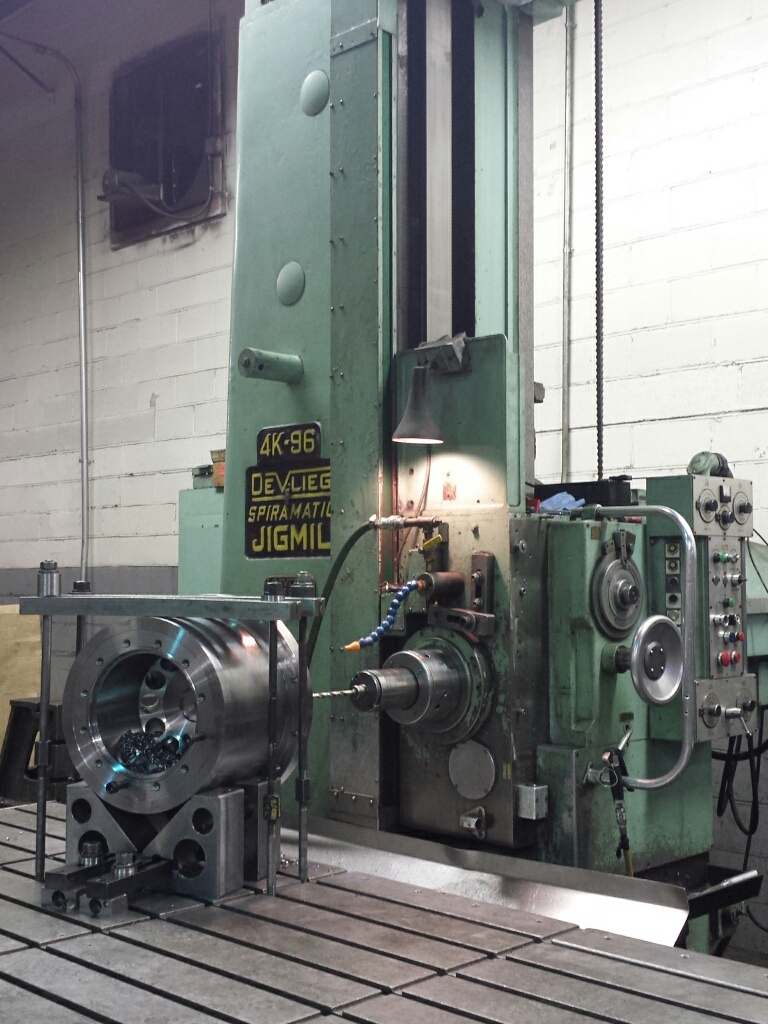
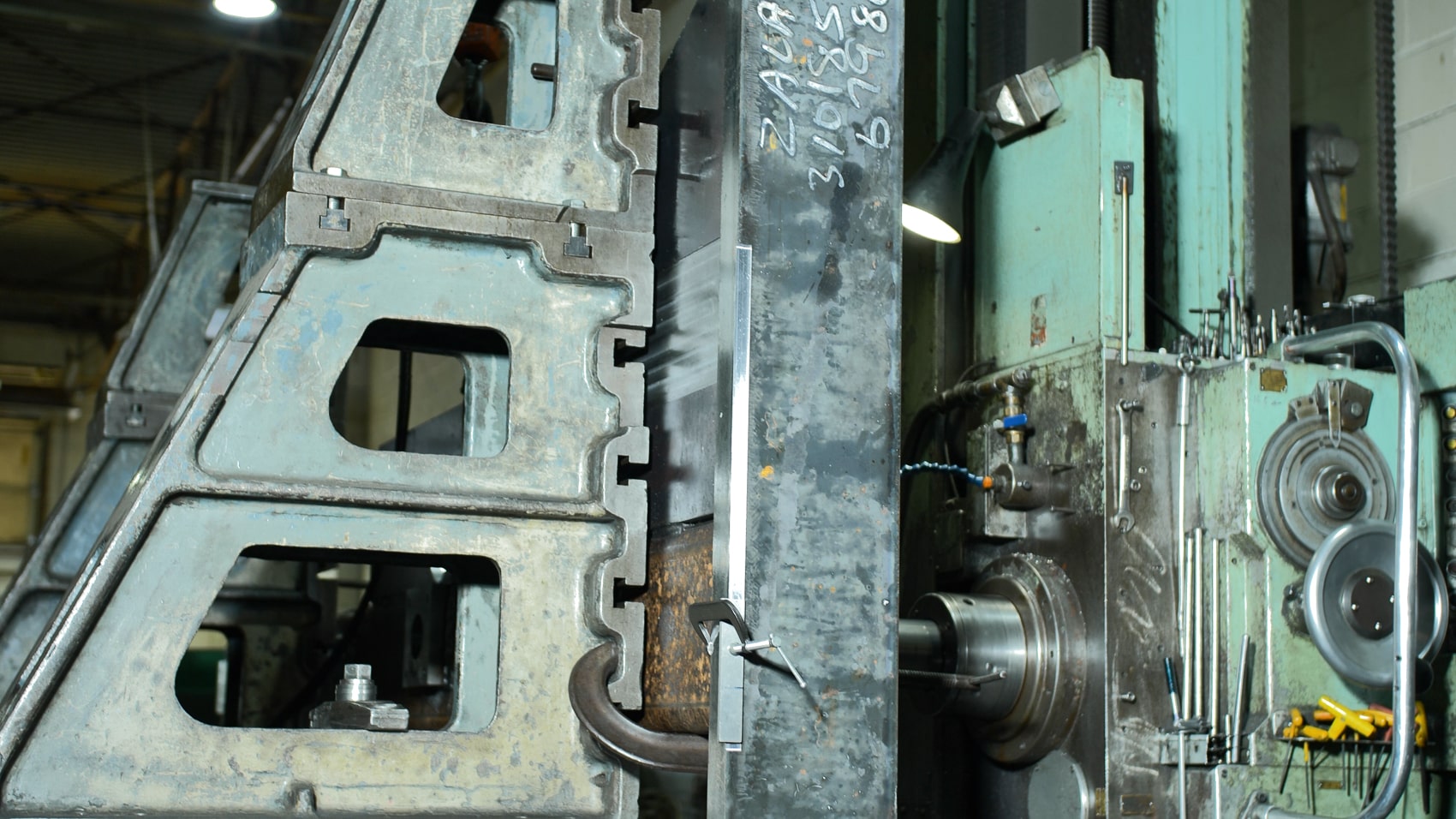
Large part machining is what this shop is set up for. Vertical turning to 60″ diameter on two vertical turret lathes, horizontal turning to 43″ diameter and 170″ between centres, milling to 157″ × 40″ × 70″ on the Zayer, line boring to 20″ diameter, honing to 26″ bore and 120″ long, and a 10-ton lift to move it all. That is the capacity most shops in New Jersey turn away, and it is why the big parts in this region end up in Hillsborough.
Big parts are a different job, not just a bigger one. The weight has to be held safely, the setup has to respect a casting that is not quite what the drawing says, and every operation has to keep the reference the last one established. This page is the overview; each machine has a page of its own for the detail — large vertical turning, CNC milling, shaft machining and large fabrication.
| Vertical turning | to 60″ diameter — two Giddings & Lewis vertical turret lathes |
| Horizontal turning | 43″ × 170″ between centres (Poreba); 26″ × 160″ (Tur) |
| CNC turning | to 32″ diameter × 60″; 14″ × 83″ |
| Milling | 157″ × 40″ × 70″ on the Zayer; 60″ × 30″ × 30″ with 4th axis on the Okuma Millac |
| Line boring | to 20″ diameter over roughly 50″ |
| Bore honing | to 26″ diameter and 120″ long |
| Gundrilling | to 4″ diameter × 96″ deep |
| Lifting | to 10 tons |
| Tolerance | under .001″ as standard |
CNC is the right answer for a repeat part. On a one-off casting, a worn part that is no longer round, or a forging that needs roughing before anybody knows where the good material is, the machinist adjusting as the cut goes is what gets the part out right. The large lathes and the line boring are run by people who have spent years on them, and that is deliberate.
Heavy shafts and rotors — turned between centres to 170″, journals ground in house.
Castings and forgings — pump housings, gear blanks and heavy-walled bodies roughed and finished on the vertical lathes.
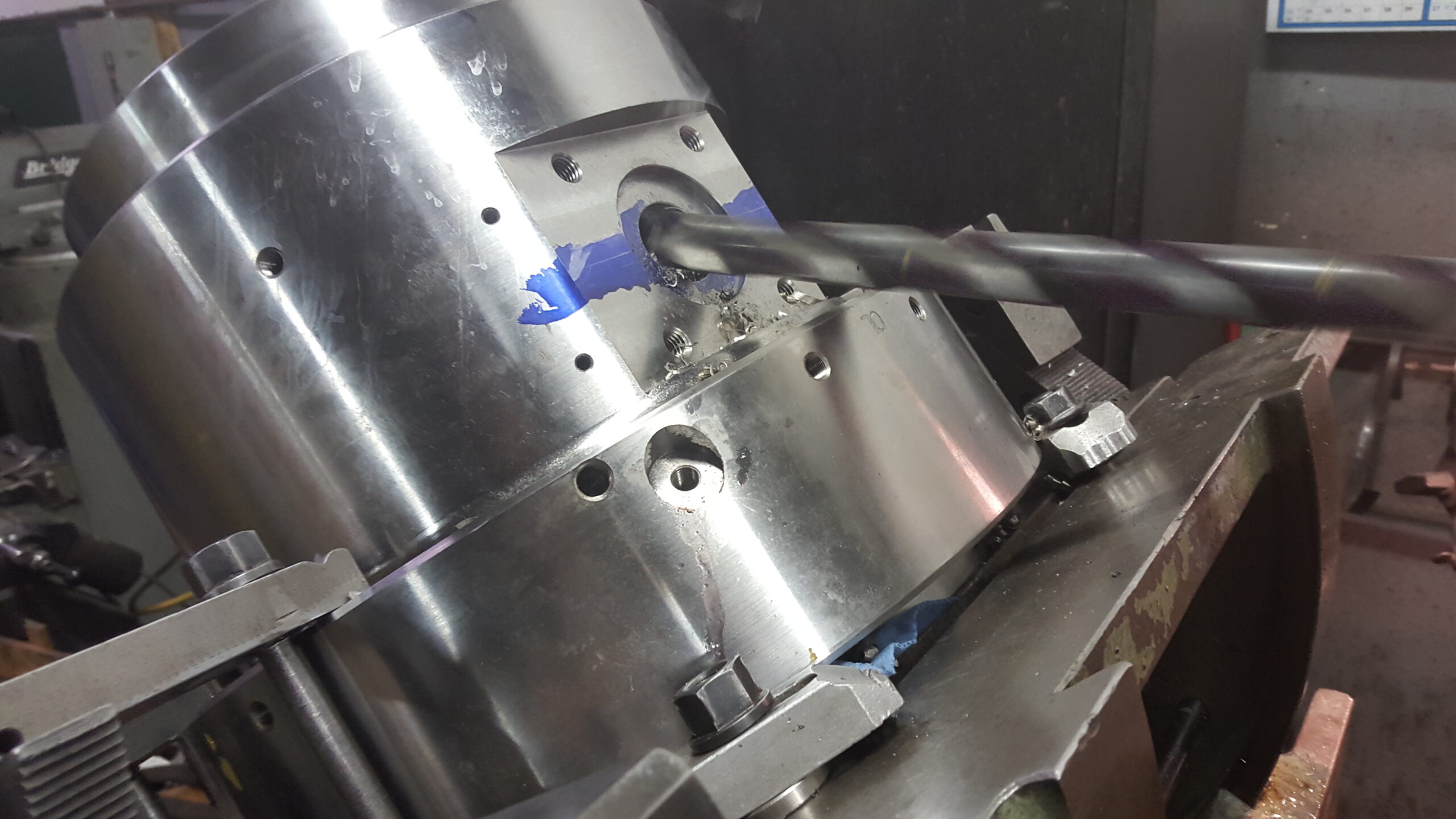
Hubs, flanges and rings — faced, bored and drilled on the vertical lathes and the Zayer.
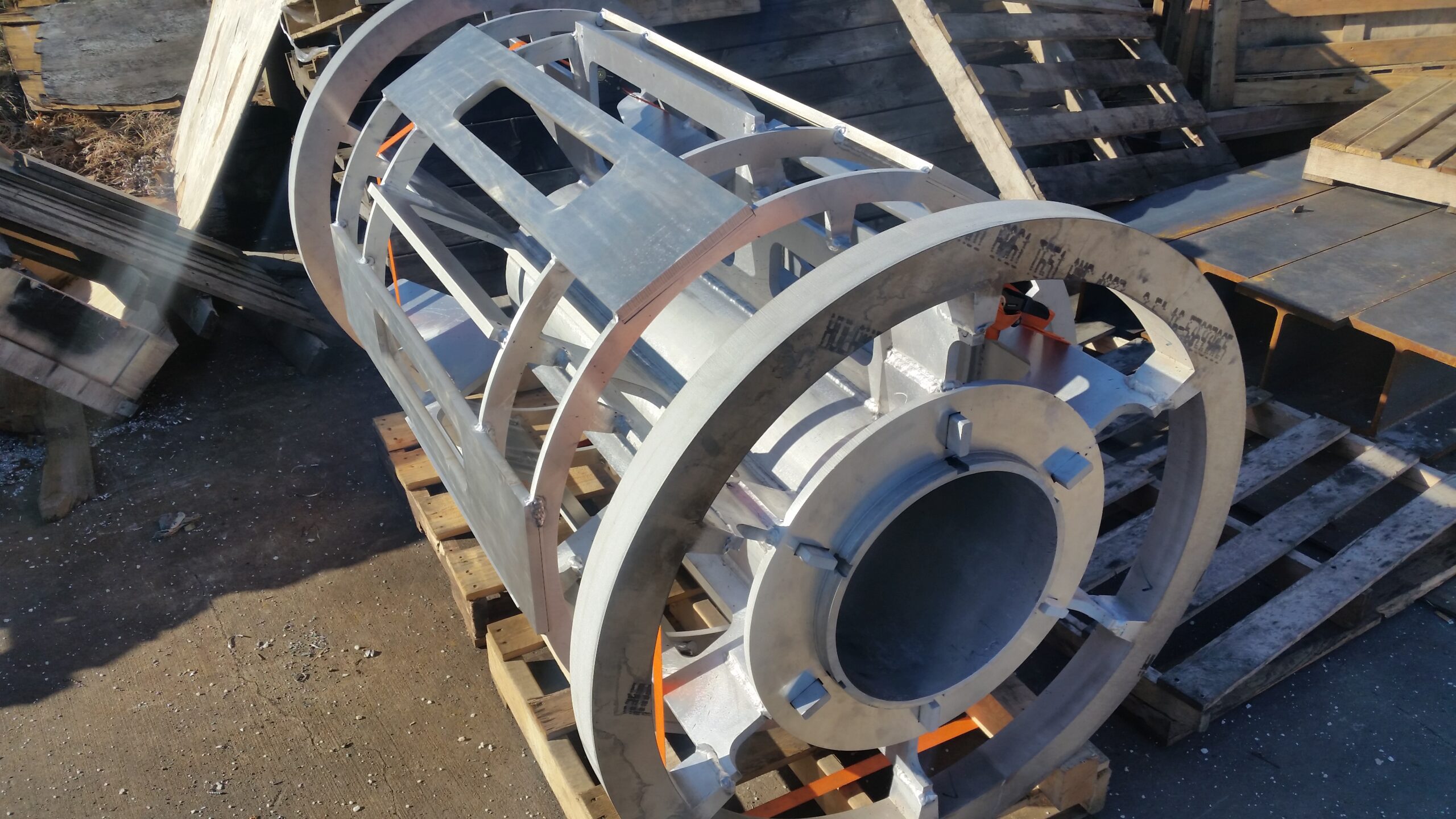
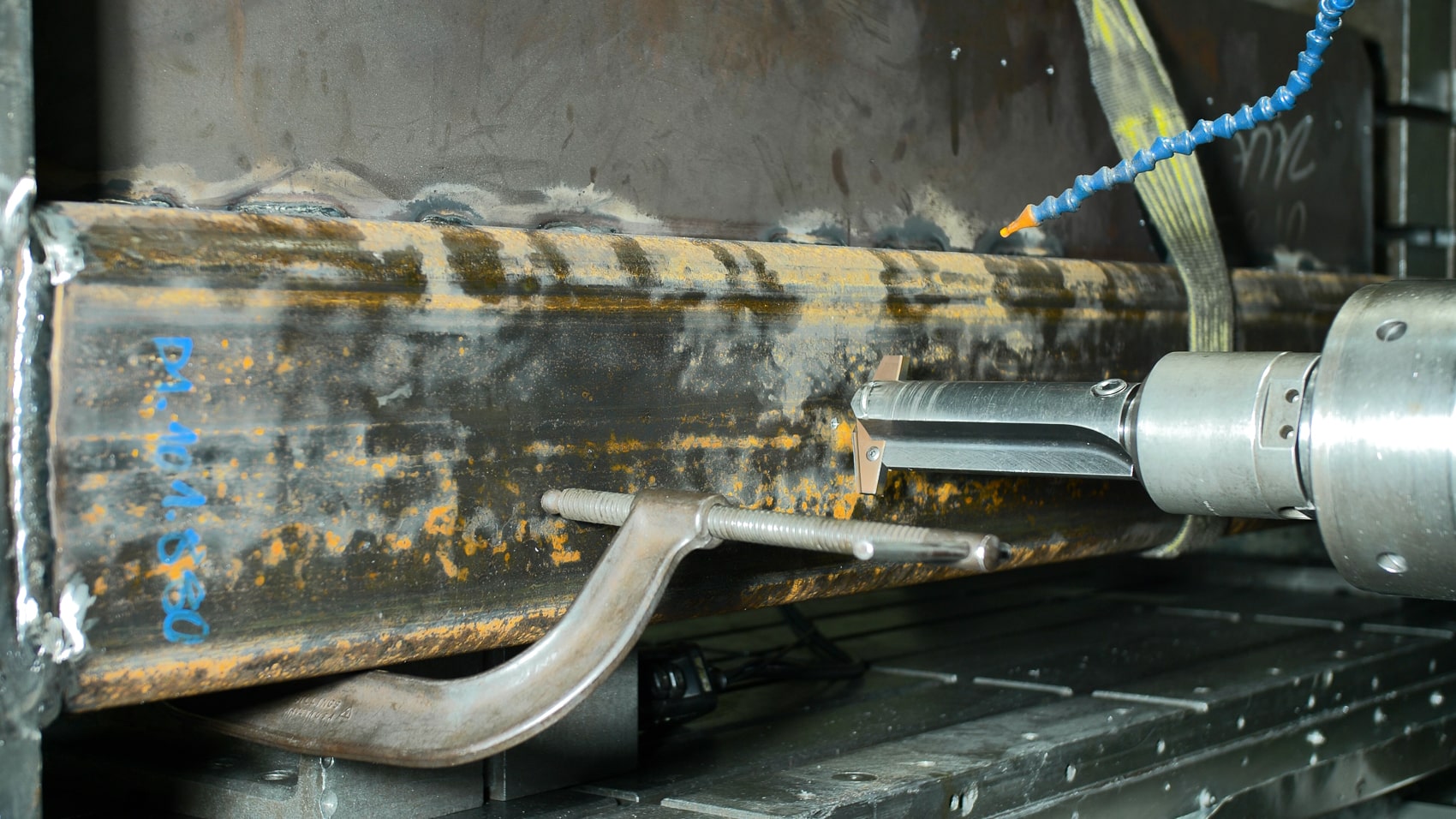
Frames, bases and mounting plates — welded here, then machined for flats, bores and hole patterns after welding so the faces run true.
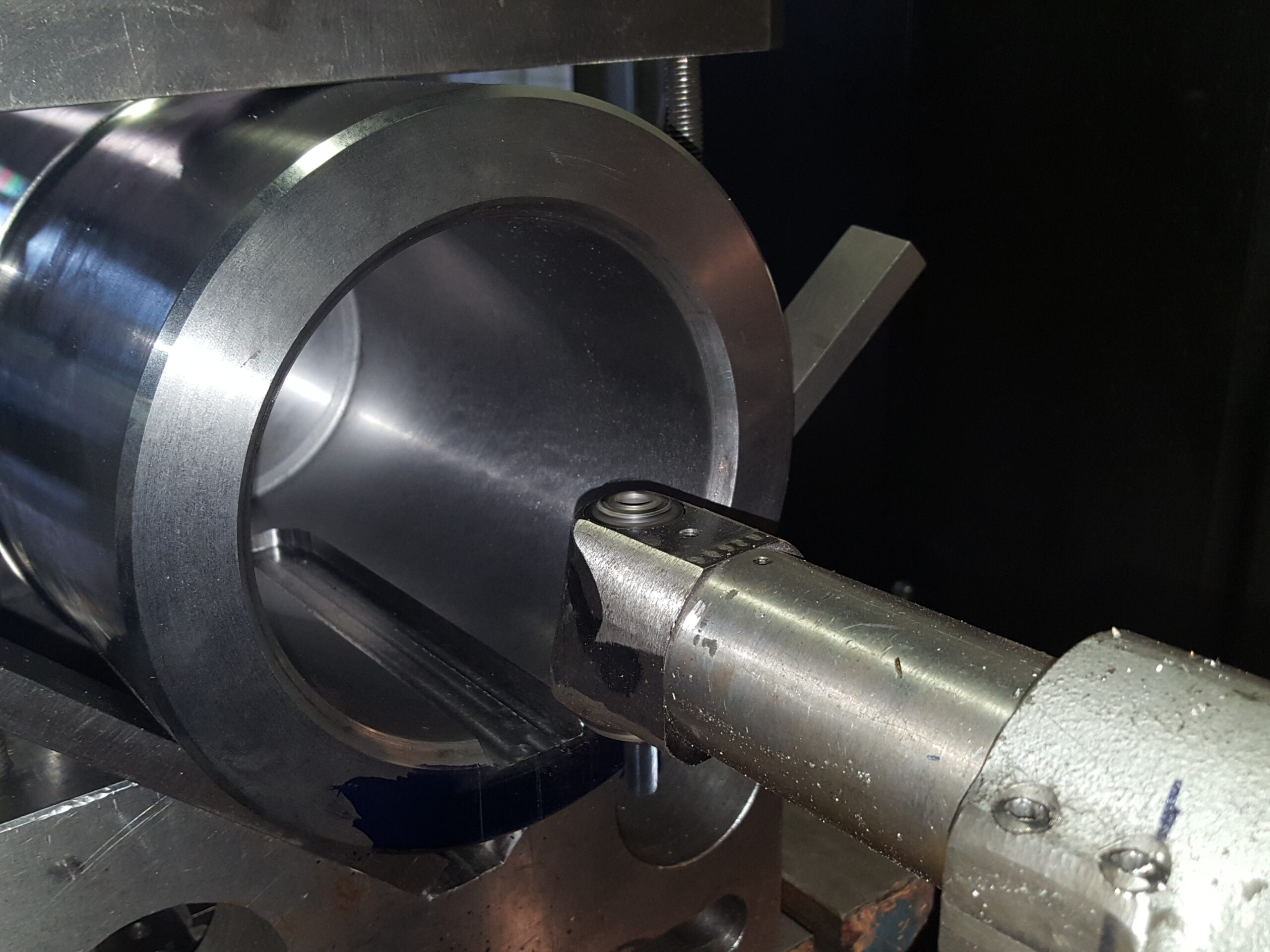
Bearing housings and gearbox cases — line bored to 20″ in house as part of a gearbox rebuild.
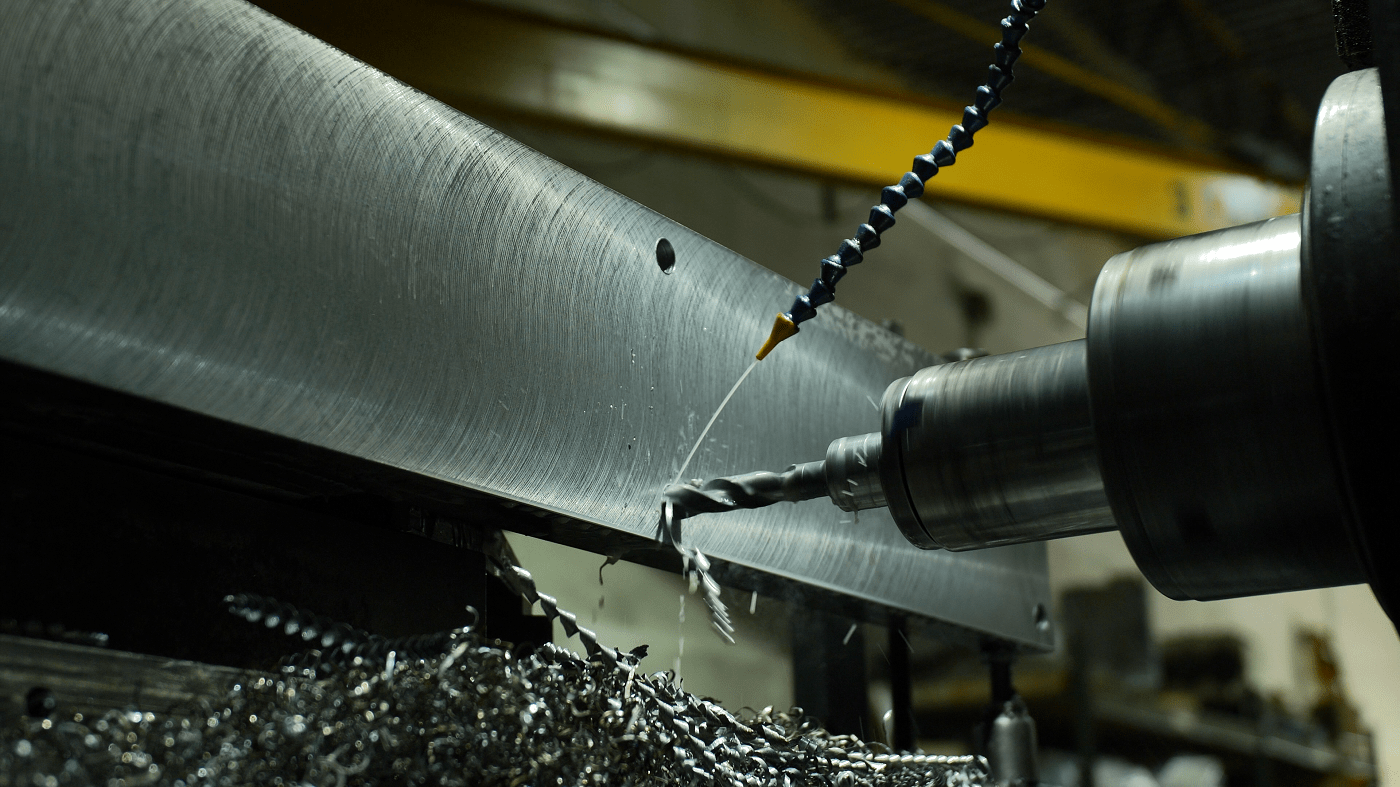
Cylinders, barrels and long tubes — turned, gundrilled and honed to 26″ bore and 120″ long, including extruder barrels.
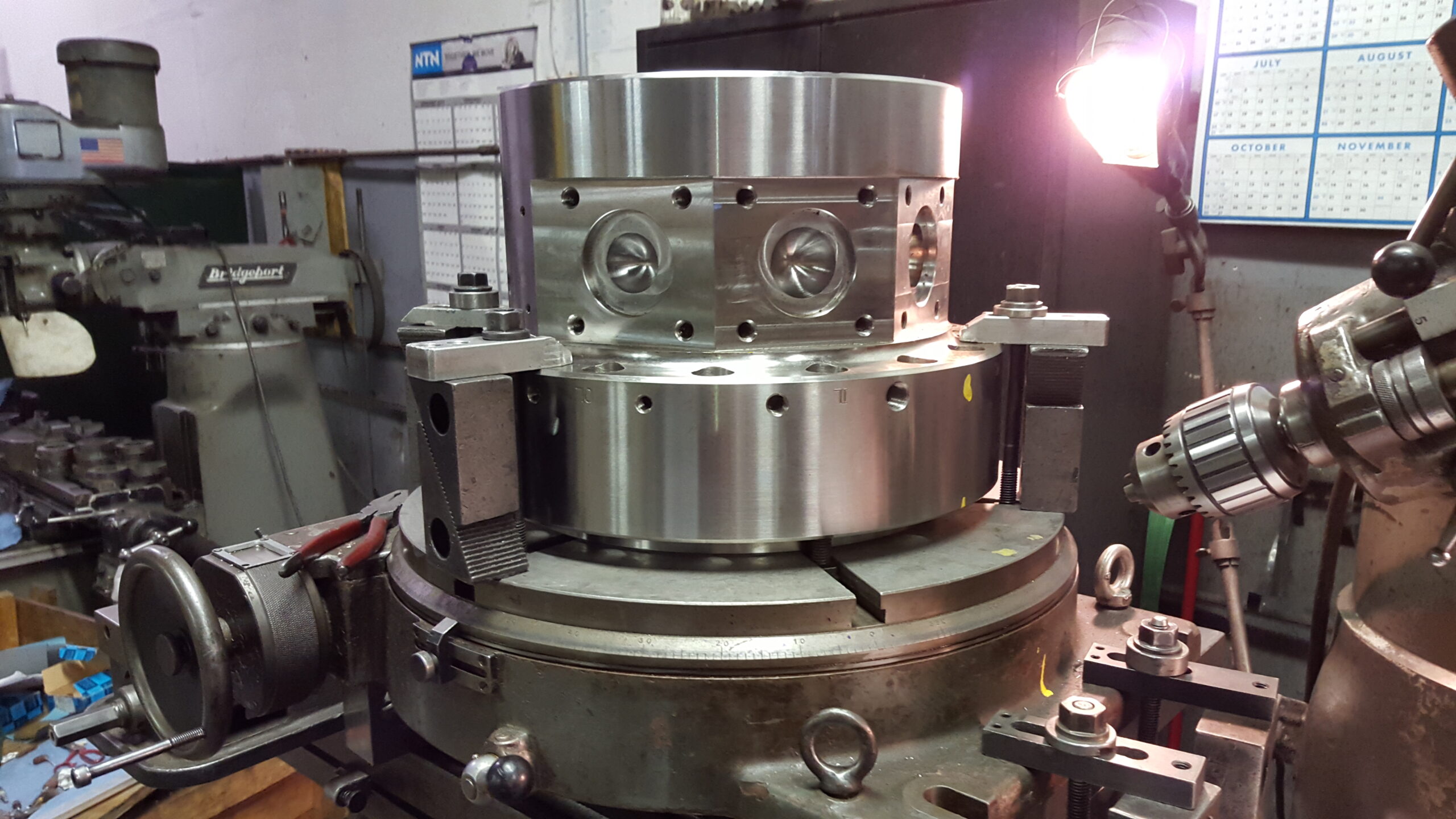
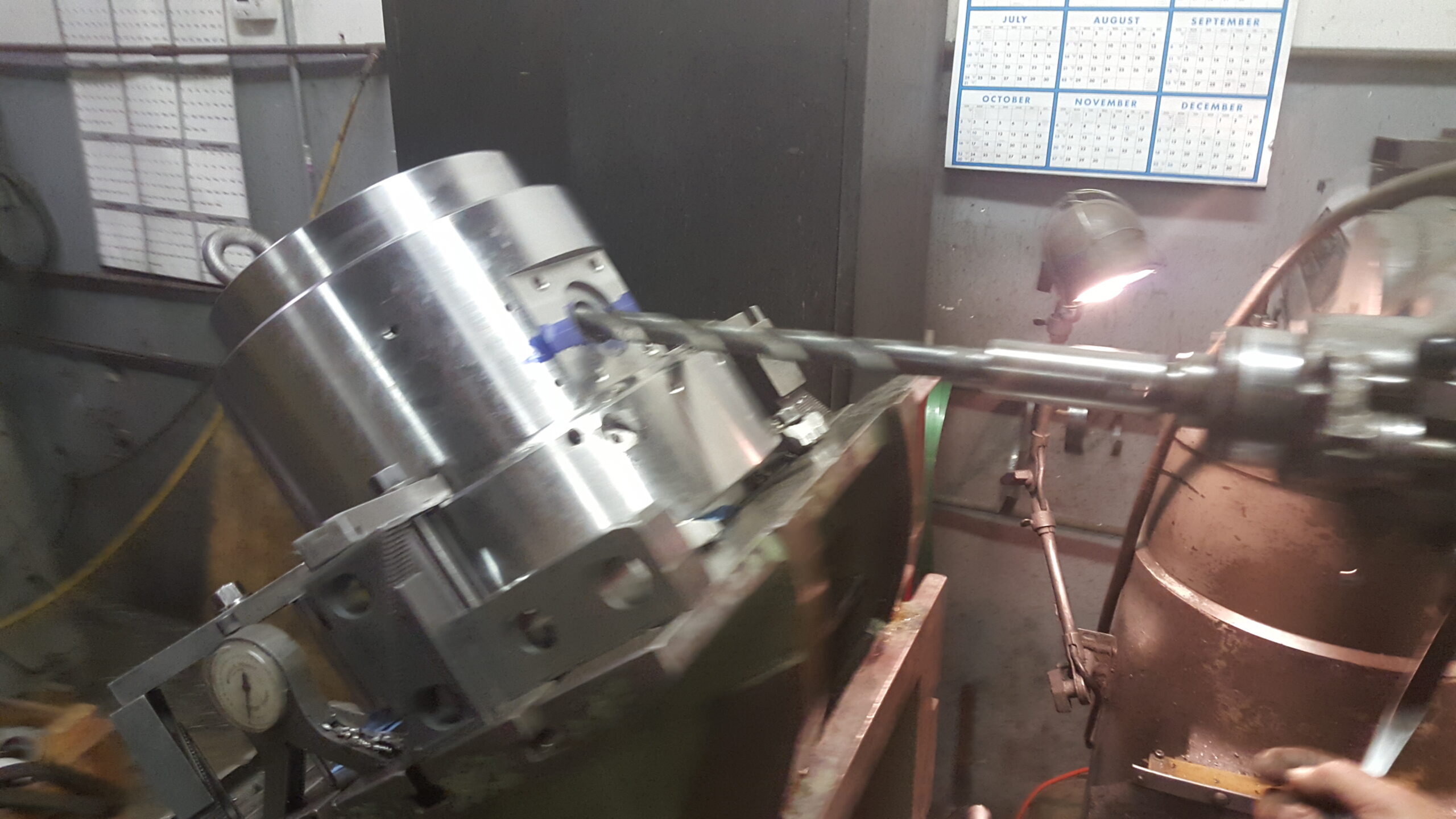
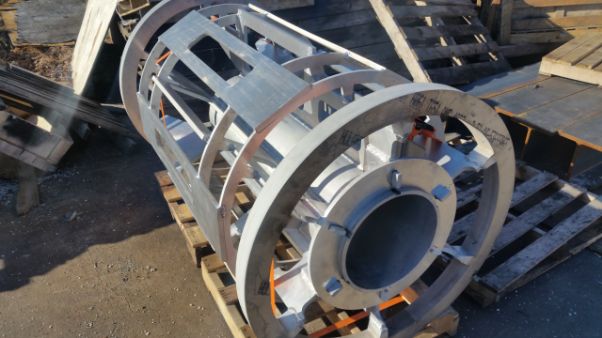
Die assemblies — blown film die bodies and sections to 50″ diameter.
A lot of large-part work is repair rather than new. A worn journal on a shaft nobody makes any more, a bearing bore gone oval in a housing, a roll face that has picked up damage — the part comes in, we measure it, and we machine it back to size or make a new one from the old one. Where there is no drawing, we reverse engineer it; where the line is down, emergency machining explains how fast it can move. For parts that are obsolete or would cost a fortune to replace, this is usually the sensible route.
A large part goes through several operations, and here it does not leave the building between them: rough turning, welding, milling, line boring, honing, grinding and polishing all happen on the same floor. The reference set on the first operation carries through to the last, and the part is lifted, fixtured and inspected by the same people. Heat treating, nitriding and plating go to our vendors and come back for final machining, so the finished size is still ours.
Large parts are awkward to ship, so most of this work is regional: plants across New Jersey — Bridgewater, Somerville, Flemington, Edison, Piscataway and Trenton, and the industrial corridor through Newark, Elizabeth, Jersey City and Paterson — and eastern Pennsylvania, New York and New England. Customers in Somerset, Hunterdon, Middlesex and Mercer counties often bring the part in on their own truck. Further afield, parts go crated across the United States, Canada and Mexico. Send the print and the weight and we will tell you how we would hold it.

The CNC lathes take the large work that fits them — to 32″ diameter on the Okuma — and the four large manual lathes and the Zayer take the rest. All of it is on the facility list.
Up to 20″ Diameter Turning x 54″ Long.
Great for Very Precise Turning.
Large and Small Quantities.
Up to 18″ Diameter Turning x 45″ Long
Precision Turning with Great Finishes
Great for Shafts and Adapters
Vertical turning to 60″ diameter, horizontal turning to 43″ diameter and 170″ between centres, milling to 157″ × 40″ × 70″, line boring to 20″, and honing to 26″ bore and 120″ long. We lift to 10 tons. If the part is close to any of those, send the print and the weight and we will tell you how we would hold it.
Up to 10 tons. That is the lift, and it is the number that decides whether a large part can come here at all. Tell us the weight with the enquiry and we will confirm straight away.
Yes, and a good share of the large work is exactly that. The part is set up to the surfaces that matter and machined true to the datum on the print rather than to whatever the foundry left. Pump housings, gear blanks, heavy-walled bodies and large flanges are typical.
Yes — that is the normal order of work here. Frames, bases and plates are welded in our own shop, then machined for flats, bores and hole patterns so the finished faces run true rather than following wherever the weld pulled. See large fabrication.
Yes, in house, to 20″ diameter over roughly 50″. It is how bearing bores in gearbox cases and housings are brought back to size and alignment as part of a rebuild.
Yes. Worn journals, oval bearing bores, damaged roll faces — the part comes in, we measure it and machine it back to size, or make a new one from the old one when there is no drawing. For obsolete parts this is usually far cheaper than replacing the equipment.
Carbon and alloy steel, 4140 HT, stainless, cast iron, bronze, Inconel and titanium among others. Heat treating, nitriding and plating go to our vendors and the part comes back here for final machining.
Hillsborough, New Jersey, in Somerset County. Large parts are awkward to ship, so most of this work comes from New Jersey, eastern Pennsylvania, New York and New England, and customers often bring the part in on their own truck. Further afield, parts go crated across the United States, Canada and Mexico.

Vertical turning to 60″ diameter, horizontal turning to 170″ between centres, milling to 157″ x 40″ x 70″, and a ten-ton lift. Die assemblies, large bored housings, weldments and heavy castings.
Heavy components machined on our vertical lathes, the Zayer and the line boring setup in Hillsborough, New Jersey — die assemblies, weldments and large bored housings.