
emergency machining · hillsborough, new jersey
Home / Emergency Machining
When a machine goes down, every hour of downtime costs production. Emergency machining is a regular part of the work at our Hillsborough, New Jersey machine shop. Plant engineers, maintenance managers and municipal utilities contact us when a broken shaft, a damaged gearbox component or a worn extruder part has stopped a line. We repair the part or machine a replacement on an expedited schedule to get the equipment back into service as quickly as possible.
An emergency job usually starts with an urgent phone call or email. You tell us what failed and what the part has to do, and we work out the schedule with you right away. Emergency quotes are turned around quickly, because on a breakdown the lead time matters as much as the price. We keep a large stock of steel bar and plate, 4140 round bar and other materials on hand, so most emergency work goes straight onto a machine instead of waiting for a material delivery. Many of our regular customers bring the damaged part straight to our shop for evaluation. If it can be saved, we repair it by welding and re-machining, installing sleeves, or replacing worn journals and damaged features. If it can’t, we reverse engineer the part, produce a drawing or solid model, and machine a new one.
Turnaround depends on the part. Most emergency jobs are finished within one to two days, and more involved work can take a week or longer. When a customer needs to get back up and running, we work Saturdays and through holidays. Our fastest turnaround was a couple of hours. The Little Egg Harbor, NJ water department needed a stainless steel replacement shaft, and we machined it while their driver waited at the shop.
Some emergency repairs are on equipment that can’t simply be replaced. The New Hope Railroad needed a part on their 100-year-old steam locomotive repaired so it could get back to giving rides. We welded the steam seal seat and re-machined the taper bore so the part would seal and work again. The job was finished before Memorial Day weekend, in time for the holiday rides. It’s one of many repairs like it over the years.

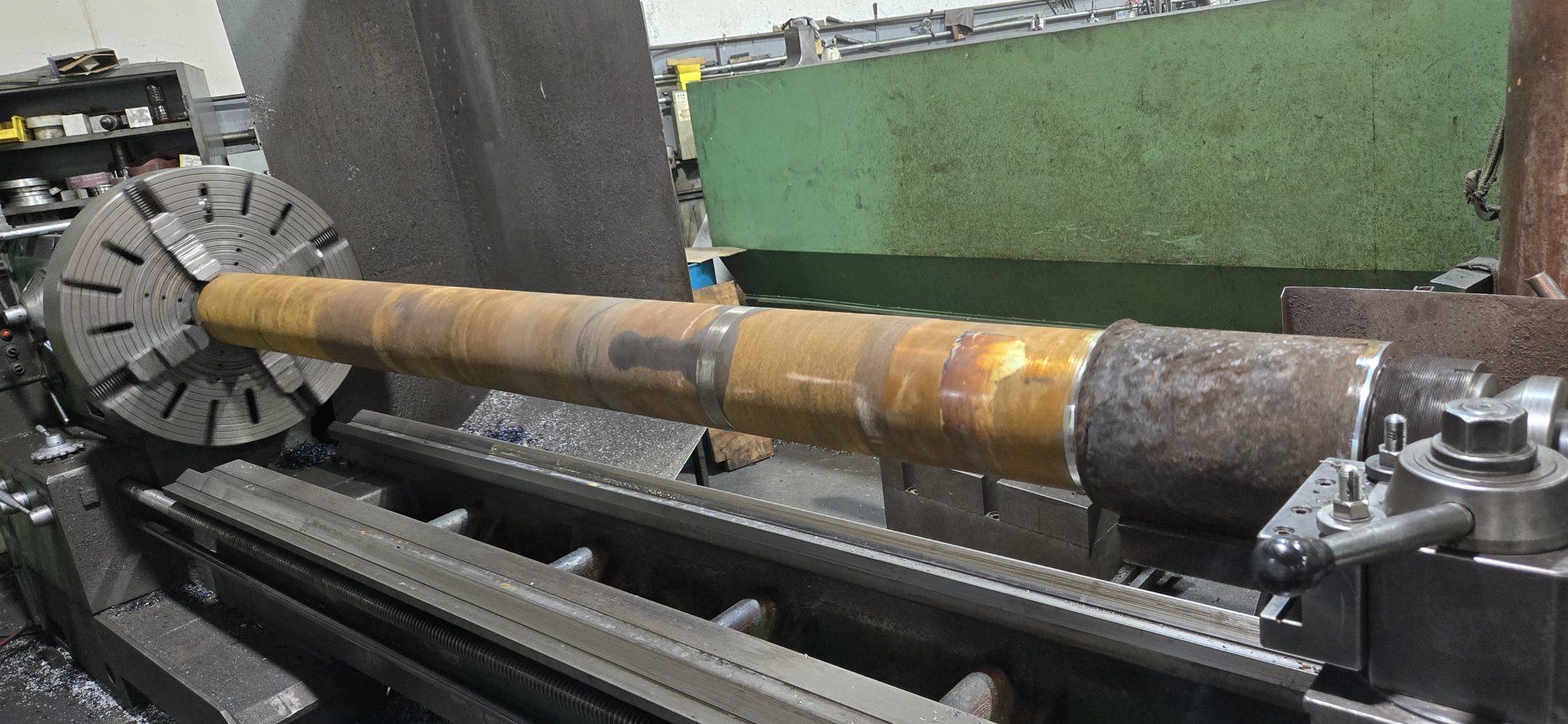
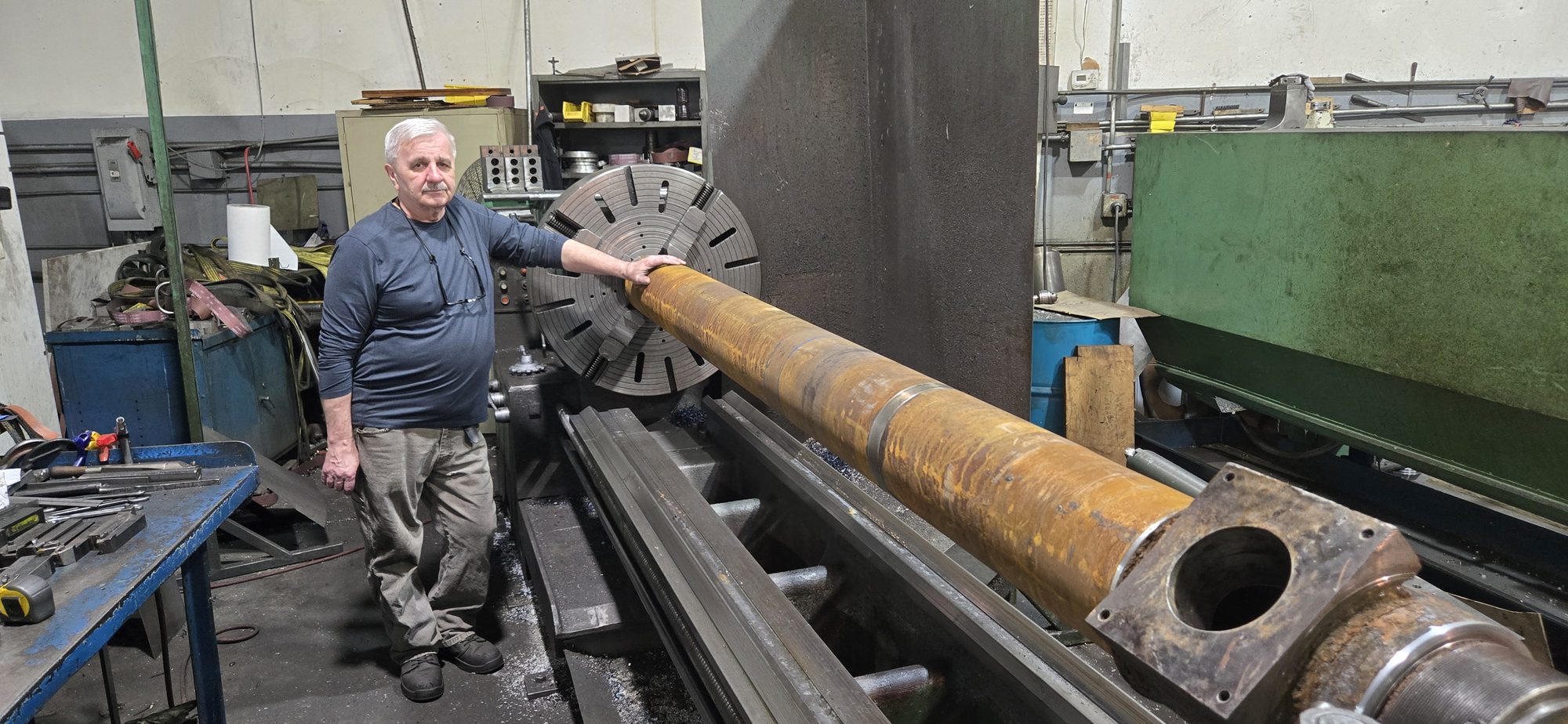
A long shaft on the engine lathe, carried in the steady rest to hold it true over its length.
Every breakdown is different, but most emergency jobs move through the same six steps.
Call the shop or send an urgent email. Tell us what failed, what the part does and when the equipment has to be running again.
Bring the damaged part to our Hillsborough shop for evaluation, along with the drawing if you have one.
We look at the part with you and decide whether it can be repaired or a new one should be machined.
Emergency quotes are turned around quickly, and we work out the schedule with you right away.
Most jobs go straight onto a machine from our stock of steel bar and plate, 4140 round bar and other material.
Most emergency jobs are finished within one to two days. We work Saturdays and holidays when the job calls for it.
When a damaged part comes in, the first question is whether it can be saved. If it can, we repair it. If it can’t, we make a new one.
Worn or damaged areas built up by welding, then re-machined back to size.
Worn journals and bores restored by installing a sleeve and machining it to size.
Worn journals and damaged part features machined off and replaced.
Seal seats, taper bores and fits re-machined so the part seals and works again.
When the part can’t be saved, we measure the original and produce a drawing or solid model to make a new one.
A new part machined from our material stock, to your drawing or to the original part.
The Little Egg Harbor, NJ water department needed a stainless steel replacement shaft. We machined it in two hours while their driver waited at the shop.
We welded the steam seal seat and re-machined the taper bore so the part would seal and work again. The job was finished before Memorial Day weekend, in time for the holiday rides.
When a line is down, two things decide the date: whether the material is on the shelf, and whether the part fits the machines. Both are below.
| Material in stock | steel bar and plate, 4140 round bar and other stock |
| Tolerances | under .001″ as standard |
| CNC turning | 28″ diameter × 60″ long (Okuma LB4000EX); 14″ × 83″ long (Doosan Puma 300XLY) |
| Vertical turning | 60″ diameter (Giddings & Lewis vertical turret lathes) |
| Large manual turning | 32″ diameter × 170″ between centres (Poreba) |
| Milling | to 157″ — Zayer |
| Line boring | to 20″ diameter across a 50″ span |
| Lifting | to 10 tons |
| Materials | 4140 HT, 15-5 PH and other stainless steels, Inconel 718, titanium, bronze |
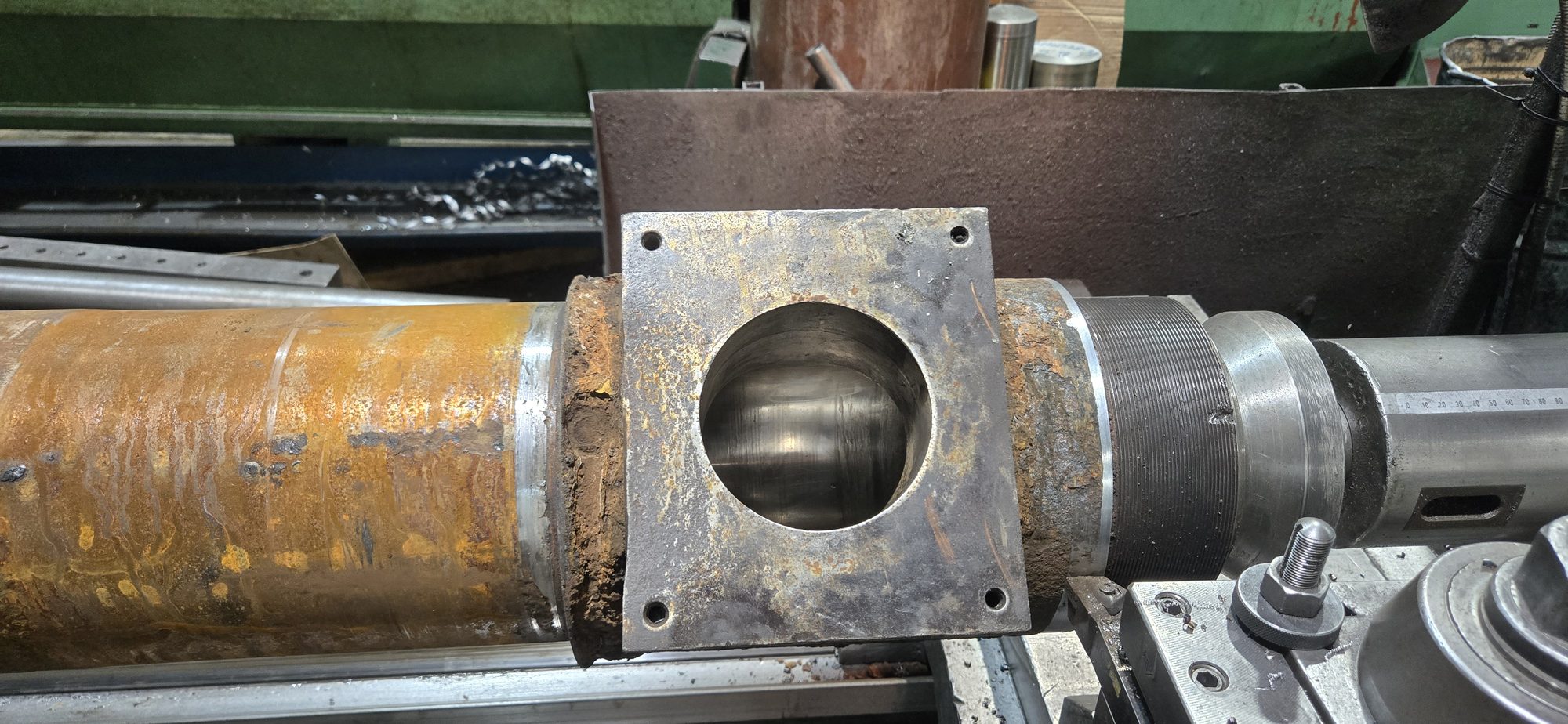
The kind of parts that come through the shop on a breakdown: shafts, gearbox components and welded work machined to size.


Most emergency jobs are finished within one to two days. More involved work can take a week or longer, and our fastest turnaround has been a couple of hours.
Rush work is scheduled ahead of standard jobs. Simple turned parts have gone out the same day — our fastest was a stainless shaft in two hours with the customer’s driver waiting at the shop. We work Saturdays and through holidays when a line is down. We are not a 24-hour shop, so a call that comes in overnight reaches us the next morning.
Call the shop or send an urgent email describing what failed and the part that has to be repaired or replaced. We will work out the schedule with you right away.
Yes. Many of our regular customers bring damaged parts to our Hillsborough, NJ shop, where we evaluate them and decide with you whether to repair the part or machine a new one.
No. If there is no drawing, we reverse engineer the part from the broken or worn original and produce a drawing or solid model to make the new one.
Often, yes. We repair parts by welding and re-machining, installing sleeves, and replacing worn journals and damaged features.
Yes. When a customer needs to get equipment back up and running, we work Saturdays and through holidays.
Yes. We keep a large inventory of steel bar and plate, 4140 round bar and other material, so most emergency work starts without waiting for a material delivery.
Replacement shafts, gearbox components and extruder parts, as well as older equipment, including a part from a 100-year-old steam locomotive for the New Hope Railroad.
Usually one of three things. A worn journal is built up by welding and re-machined, or sleeved and ground back to size. A broken shaft is measured and a new one machined from bar stock we hold here. If the shaft carries splines, keyways or a gear, we reverse engineer those features from what is left of the original.
Emergency jobs use the same machines and processes as our scheduled work. Each page lists the machines and sizes involved.
Call the shop or email sales@zalamachine.com with what failed and when you need it back in service. You can also use the quote form below.